A Viksit Bharat Run at Golden Gate Bridge: Celebration or a failure to read the moment?
There are moments when the symbolism of an event matters as much as the event itself. The Viksit Bharat Run, being organised by the Consulate General of India in San Francisco on September 27 at the Golden Gate Bridge, is one such occasion.
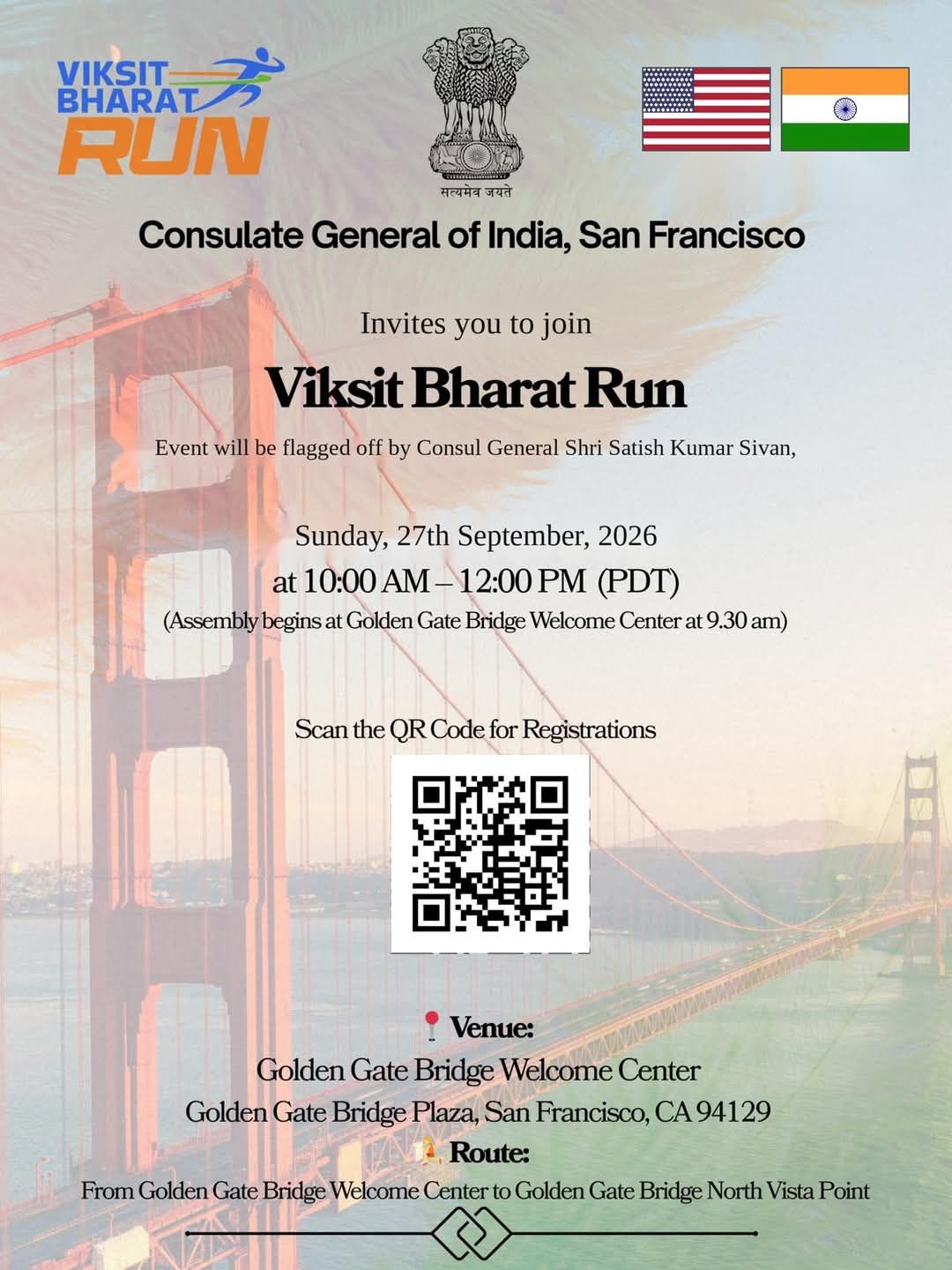
According to the event announcement, the run will begin at the Golden Gate Bridge Welcome Center, with Consul General Satish Kumar Sivan scheduled to flag it off. The stated objective is to bring the community together around the idea of a developed India.
On the face of it, there is nothing unusual about an Indian diplomatic mission organising a community event. Indian missions routinely engage with the diaspora through cultural, educational and public events.
But the timing deserves scrutiny.
In recent weeks, sections of the Indian-American community have been expressing anxiety over anti-Indian rhetoric and racism in the United States. Ahead of Ganesh Chaturthi, messages circulated among some Indian-Americans urging families to keep celebrations private and avoid large public gatherings, particularly in parts of Texas. These were community-driven advisories rather than an official US-wide security warning, but they nevertheless reflected a palpable concern about how Indian cultural gatherings could be portrayed or targeted online.
The concern is not entirely without context.
There have been several recent controversies involving anti-Indian and anti-South Asian rhetoric. A September social-media campaign involving Texas Republican politician Bo French and a photograph of South Asian students triggered accusations of racism and criticism from members of both political camps. Separately, a US Department of Homeland Security social-media post featuring a character identified as “Mr Singh” drew criticism from Sikh and Hindu advocacy organisations, which described the imagery as discriminatory.
Indian American Impact has also said South Asian Americans are experiencing increased hate, discrimination, harassment and threats, prompting the organisation to convene South Asian elected officials and community leaders for discussions on the issue.
Against this backdrop, the question is not whether Indian-Americans should retreat from public life.
They should not have to.
Nor should Indian cultural celebrations become something that communities feel compelled to hide because somebody might object to them. The right response to racism cannot be to make an entire community invisible.
But that is precisely why the role of an Indian diplomatic mission becomes important.
A consulate is not merely an organiser of events. For many members of the diaspora, it is also an institutional point of reassurance — particularly when immigration, discrimination, identity and personal security become sources of anxiety.
At such a moment, one could reasonably ask whether the diplomatic mission should be devoting equal or greater attention to community reassurance, engagement with local authorities, anti-discrimination initiatives and direct conversations with Indian-American families.
The Viksit Bharat Run, meanwhile, is an overtly public event at one of America's most recognisable landmarks. Its visibility is not inherently problematic. In fact, there is another way to look at it: perhaps precisely when sections of a community feel intimidated, a peaceful and lawful public gathering can demonstrate confidence rather than fear.
That tension is worth acknowledging.
The issue, therefore, is not whether the run should be characterised as right or wrong. It is whether the message matches the moment.
“Viksit Bharat” speaks about India's aspirations as a rising global nation. But India's relationship with its diaspora is also about something more immediate: whether Indians living thousands of kilometres from home feel secure, respected and supported.
Perhaps the more powerful message from an Indian consulate at this particular juncture would be one that combines national pride with diaspora protection.
A run across the Golden Gate Bridge can celebrate India.
But the larger responsibility is to ensure that Indians in America know that, when the atmosphere becomes uncomfortable, their concerns are being heard too.
More from Beyond Dakshin
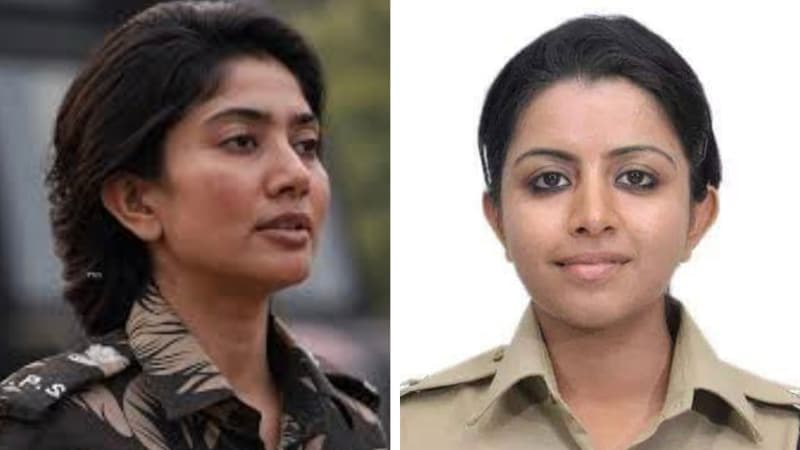
Sai Pallavi cuts her hair for ‘OM’, takes inspiration from IPS officer Merin Joseph; mother reacts in shock
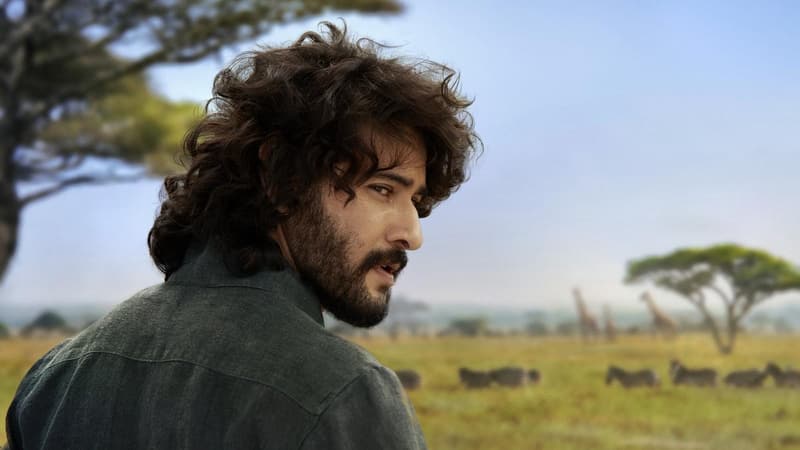
Mahesh Babu–Rajamouli’s ‘Varanasi’ eyes record ₹290 crore Telugu States deal, set to surpass ‘RRR’
Allu Arjun lines up mythological pan-India spectacle with Boyapati Sreenu after ‘Raaka’!
More from Politics
Padma Shri Dr B. Raman Rao enters Guinness World Records for treating over 33 lakh patients over 2777 Sundays
Rahul Gandhi calls for rethinking democracy and economic models amid growing influence of tech giants