Bengaluru techie cracks concept behind ₹85,000 Temple wearable using laptop; Deepinder Goyal impressed
A Bengaluru-based technology enthusiast has attracted the attention of Zomato co-founder Deepinder Goyal after demonstrating how an ordinary laptop could partially replicate the microphone-free voice-detection technology behind Goyal's ₹85,000 Temple wearable device
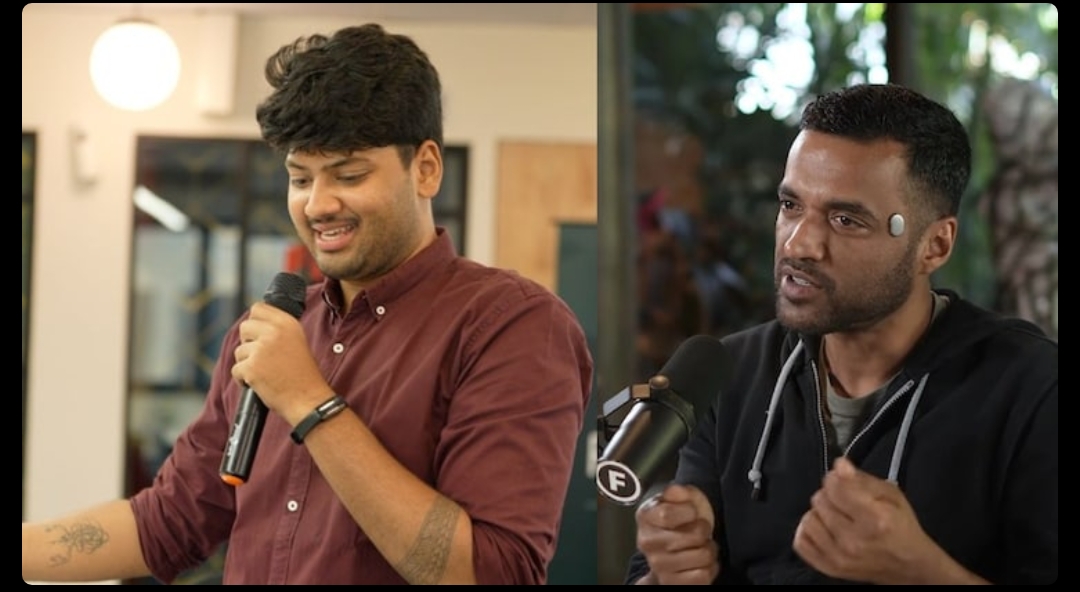
Krishna Veera Vanamali Y, a venture capital professional, shared his experiment on LinkedIn, explaining how he used his laptop's built-in accelerometer to detect vibrations and convert them into text without activating its microphone. His demonstration impressed Goyal, who publicly appreciated the effort and offered him an opportunity to test the actual Temple device.
The experiment was inspired by Temple's unusual approach to voice recognition. Unlike conventional devices that rely on microphones to capture sound waves, Temple uses sensors to detect tiny physical vibrations generated through the skin and skull when a person speaks.
Vanamali initially attempted to capture his voice by speaking, shouting and humming near his laptop. However, the accelerometer could not detect the higher frequencies associated with ordinary speech.
He subsequently slowed down a recorded sentence by 40 times and played it through the laptop's speakers while keeping the microphone disabled. The slower playback brought the vibrations within the accelerometer's detectable frequency range. After recording the vibrations, he accelerated the captured signal and processed it through a speech-to-text model, which successfully identified the spoken words.
The experiment demonstrated the underlying principle of vibration-based speech recognition, although it did not reproduce Temple's ability to detect normal speech directly from a person's body.
Responding to the demonstration, Goyal wrote, "Nicely done," and explained that Temple employs two accelerometers operating at high sampling frequencies to capture the wearer's voice.
Goyal revealed that the device increases its sampling frequency to as much as 16 kHz when activated through a double tap. Maintaining such a high frequency continuously would significantly drain the battery, he explained.
Impressed by Vanamali's curiosity, Goyal invited him to test Temple for a day, an offer the Bengaluru professional accepted.
Temple, positioned as an AI-powered wearable and precision fitness tracker, is designed to sit against the side of the head. Its developers claim that the device can recognise the wearer's speech while filtering out surrounding conversations, without using a conventional microphone.
Priced at ₹85,000 in India, Temple opened for pre-orders earlier this month, with deliveries expected to begin in early 2027. The device also promises health and fitness tracking capabilities, including heart rate, sleep and other physiological measurements.
However, the product has generated considerable debate over its pricing, scientific claims and practical applications. Some medical experts have questioned whether its health-related measurements are supported by sufficient independent scientific evidence. Goyal has maintained that Temple is a wellness product rather than a medical device.
Vanamali's experiment has added an interesting dimension to the debate, highlighting how curiosity, basic hardware and technical ingenuity can help explore the principles behind sophisticated consumer technology, even without access to the original device.
More from Karnataka

Bengaluru startups raise $85 billion, account for 47% of India’s venture funding: Innovation Report 2026

Karnataka, UK's University of York explore biotechnology Centre of Excellence in Bengaluru