Can Fly91 and Star Air challenge IndiGo's dominance at Hyderabad's RGI Airport?
Hyderabad's Rajiv Gandhi International Airport could witness greater competition on domestic routes as regional carriers Fly91 and Star Air explore opportunities to expand their operations, potentially challenging the strong presence of IndiGo in the city's aviation market
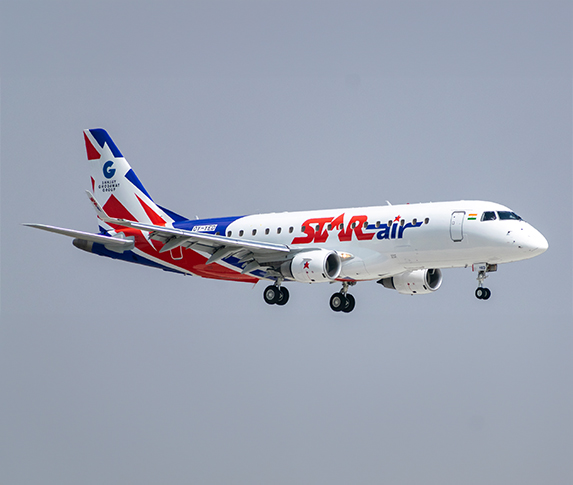
While established airlines such as IndiGo, Air India Express and Akasa Air predominantly operate narrow-body aircraft on domestic routes, smaller regional carriers could carve out a competitive position by deploying turboprop and regional jet aircraft on sectors where passenger demand supports multiple daily services.
The possibility of developing Hyderabad into a stronger regional aviation hub has gained attention following plans by Star Air and Fly91 to increase connectivity from the Telangana capital. Their expansion could offer passengers more travel options, improve flight frequencies and provide alternatives on routes currently dominated by larger carriers.
Star Air has reportedly scheduled two daily flights between Hyderabad and Bhubaneswar, while Fly91 is preparing to introduce regular daily services between Hyderabad and Kochi. These developments could represent important initial steps towards building a wider regional network from Hyderabad, although operating schedules remain subject to airline confirmation and changes.
The Hyderabad–Kochi sector is particularly significant because of travel demand generated by business, education, tourism and family connections between Telangana and Keralam. Aviation observers believe that additional services, especially flights operating during late evening and nighttime hours, could improve convenience for passengers travelling between the two cities.
A similar opportunity exists on several other domestic routes, including Tiruchirappalli, Kannur, Kozhikode, Mangaluru, Indore, Pune, Surat, Bhopal and Nagpur. Depending on passenger volumes, route distances and operating economics, these destinations could support regional aircraft services offering greater frequency and improved scheduling flexibility.
Hyderabad has previously demonstrated the potential of regional aviation operations. SpiceJet once maintained a Dash 8 turboprop aircraft base at the airport and developed a network connecting the city with several smaller destinations. That experience offers a possible model for regional airlines seeking to establish a sustained presence in the Hyderabad market.
However, competing with IndiGo would require more than introducing flights on selected routes. Regional carriers would need sufficient aircraft availability, reliable schedules, competitive fares and the ability to sustain multiple daily frequencies. IndiGo's extensive domestic network, operational scale and established customer base present significant competitive advantages.
Both Fly91 and Star Air currently operate relatively small fleets, limiting the pace at which they can introduce additional services. As their fleets expand, however, the airlines could consider deploying more aircraft at Hyderabad and developing networks connecting the city with underserved or moderately served destinations.
Regional aircraft such as the Embraer ERJ series and De Havilland Dash 8 can be particularly useful on routes where demand may not justify larger Airbus A320 or Boeing 737 aircraft. Their smaller seating capacities can allow airlines to match aircraft size more closely with passenger demand, although the financial viability of individual routes depends on operating costs, fares and aircraft utilisation.
Aviation stakeholders have also suggested that the Central and State governments consider targeted incentives to encourage regional airlines to operate smaller aircraft on routes such as Hyderabad–Gwalior and Hyderabad–Jharsuguda. Such support could include appropriate airport-charge concessions, marketing assistance and measures to encourage sustainable regional connectivity.
For Hyderabad, the emergence of additional regional operators could strengthen the airport's role as a domestic connectivity hub while reducing dependence on a limited number of major airlines for certain destinations.
The longer-term opportunity lies in creating a balanced aviation network in which large carriers serve high-volume routes and regional airlines provide frequent, commercially sustainable connections to smaller and medium-sized cities.
Whether Fly91 and Star Air can establish themselves as meaningful competitors to IndiGo at Hyderabad will ultimately depend on fleet expansion, passenger demand, route profitability and their ability to maintain dependable services. Their reported plans nevertheless point towards the possibility of greater competition and improved connectivity for passengers travelling through Hyderabad.
More from Telangana


More from Business

Shree Cement unveils ₹7,000 crore investment plans for three cement plants in Andhra Pradesh
Aster DM Quality Care invests ₹500 crore in 300-bed multispecialty hospital at Hyderabad’s Kondapur