"Cult" Review: Vishwak Sen’s ambitious slasher thriller turns into a big-screen confusion
Vishwak Sen’s attempt to introduce a new genre, marked by excessive violence, weak writing and an inconsistent narrative, fails to deliver the promised cinematic experience.

Cinema thrives on experimentation. Filmmakers must explore new genres, move beyond formula-driven storytelling and offer audiences experiences they have not encountered before. However, experimentation should not come at the cost of the audience’s patience. When a film is promoted with extraordinary claims and its director expresses immense confidence in the concept, expectations naturally rise. This is precisely the case with Cult, starring and directed by Vishwak Sen.
Vishwak Sen promoted the film as India’s first slasher thriller, generating considerable curiosity about its concept. Unfortunately, after watching the film, the question is no longer whether it qualifies as a slasher thriller, but what kind of film it actually wants to be, whom it intends to entertain and what experience it hopes to offer.
The story revolves around Elwin, the son of a Home Minister, who celebrates his birthday at a nightclub called Cult in Goa. Shortly after the party begins, information emerges that RDX explosives have been planted outside the club, leaving those inside with no apparent way to escape. As the situation becomes increasingly tense, people inside the nightclub begin getting murdered one after another.
DSP Sankalp (Vishwak Sen), who is present at the club, sets out to identify and capture the killer. The revelations that emerge during the investigation, along with the motives behind the killings, form the crux of the story.
On paper, the premise has all the ingredients for an engaging thriller. A group of people trapped in one location, seemingly with no way out, while a killer targets them one by one — the situation offers ample opportunities to build suspense. Ideally, viewers should be left wondering who the killer is, who will become the next victim and who will survive.
However, Cult gives greater importance to bloodshed, vulgar language and double-entendre dialogues than to the suspense that should drive a slasher thriller.
A slasher film is not merely about knives, axes and graphic violence. The violence must serve a narrative purpose. Characters must experience genuine fear, every killing should alter the dynamics of the story, and the audience should constantly be left wondering what might happen next. In Cult, people keep getting killed, but the dominant emotion is neither fear nor excitement. It is boredom.
The film’s problems are not limited to Vishwak Sen’s character. They are evident in its overall creative approach. There seems to be little coordination between the kind of hero Vishwak Sen wants to portray and the kind of film he wants to make as a director.
The character of DSP Sankalp lacks the authority and impact expected of a police officer confronted with such a dangerous situation. Even as circumstances become increasingly serious, his behaviour fails to reflect the intensity the situation demands.
While people are being killed inside the nightclub, the protagonist often behaves as though the situation has little to do with him. Some sequences, particularly those involving his reactions to physical attacks, feel so disconnected from the circumstances that they become unintentionally amusing.
As a director, Vishwak Sen also fails to establish the psychological state of the characters. Imagine being trapped inside a nightclub while people around you are being murdered. Fear, panic, suspicion and desperation should naturally dominate the atmosphere. The audience should be made to feel that tension.
Instead, several sequences resemble violent scenes from a video game. The violence is visible, but its emotional impact is missing.
The biggest weakness of Cult is its writing. A story that could probably have been told effectively in about 90 minutes is stretched to nearly two-and-a-half hours, making the first half particularly exhausting.
The party sequences and the comedy involving three youngsters who travel from Hyderabad to Goa occupy a considerable portion of the film. Unfortunately, much of the humour fails to generate genuine laughter. The protagonist himself makes his entry only shortly before the interval, testing the audience’s patience until then.
The identity of the killer is also relatively easy to anticipate. The flashback lacks the depth and impact needed to make the revelation convincing, thereby weakening one of the most important elements of a thriller.
The director introduces several obstacles to keep the characters trapped inside the nightclub. Bombs are planted near the exits, mobile phone signals are unavailable, and the landline can only receive incoming calls. The Home Minister’s anxiety over his son’s drug-fuelled party becoming public knowledge adds another dimension to the narrative.
These are reasonable devices for confining the story to a single location. However, the challenge lies in connecting these elements convincingly and making them work within the narrative. That is where the film falters.
The climax is particularly disappointing. Special Protection Group commandos surround the premises with their weapons trained on the building, yet remain strangely passive despite the violence unfolding inside. Instead of heightening the suspense, these sequences raise questions about the credibility of the screenplay.
It is also surprising to see such weak dialogue writing from Tarun Bhascker, who is known for his distinctive writing style. The film relies heavily on abusive language and double-entendre dialogues. There seems to be an assumption that excessive vulgarity automatically makes characters appear natural or entertaining. However, once the initial novelty wears off, these dialogues become repetitive and irritating.
Strong writing does not necessarily require strong language. What matters is whether the dialogue suits the character and the situation. Cult struggles on this front as well.
Ravi Basrur’s background score is one of the film’s few positives. His music adds energy to the party atmosphere and lends intensity to several violent sequences. The background score also helps sustain the film’s dark and aggressive mood.
The cinematography is adequate but offers little that is particularly memorable. The action choreography largely revolves around brutal killings and graphic violence, without contributing significantly to the overall storytelling.
Gayatri Bharadwaj’s character has limited scope. Tarak Ponnappa plays the spoiled son of a politician in a largely routine manner. Murali Sharma and Srikanth Iyengar, too, have little opportunity to deliver particularly distinctive performances.
Chepuri Vivek, who appears in an important role shortly before the climax, makes an impression despite his limited screen time. His performance, particularly in the sequences where his character shifts between an apparently disturbed state and normal behaviour, stands out.
A filmmaker is entitled to have a distinct vision. A director may even choose to prioritise personal creative expression over conventional audience expectations. However, that vision must translate into a coherent cinematic experience, supported by structure, emotional depth and narrative purpose.
Experimentation should not become an excuse for confusion. Was Vishwak Sen attempting to introduce a new genre? Was he trying to establish a distinctive identity through an extremely violent narrative? Or did he simply want to make something audiences had never seen before? Whatever his intention, the film needed far greater attention to its story, characterisation, dialogue and editing.
Towards the end, the film offers a hint at a possible sequel under the banner of a ‘Cult Universe’. However, before attempting to build a cinematic universe, it would have been better to give this film a convincing conclusion.
After all, a cinematic universe can only be built when the individual films that form it are capable of standing on their own. Cult has ambition, but ambition alone cannot make a film work.
More from Beyond Dakshin
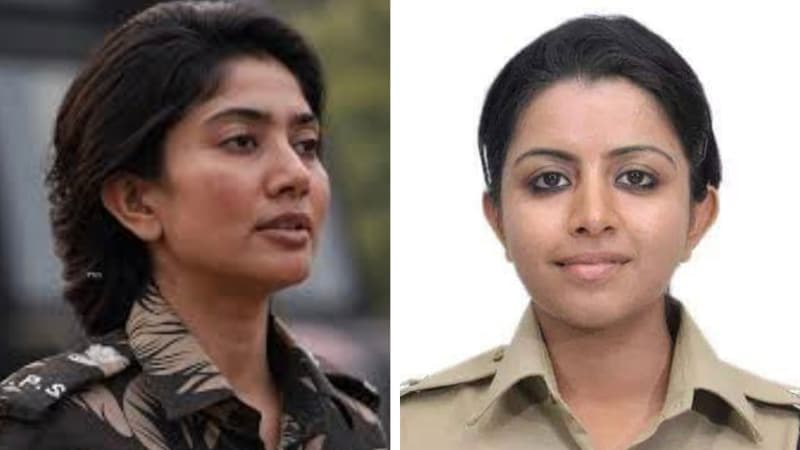
Sai Pallavi cuts her hair for ‘OM’, takes inspiration from IPS officer Merin Joseph; mother reacts in shock

Mahesh Babu–Rajamouli’s ‘Varanasi’ eyes record ₹290 crore Telugu States deal, set to surpass ‘RRR’
Allu Arjun lines up mythological pan-India spectacle with Boyapati Sreenu after ‘Raaka’!
More from Entertainment
Sai Pallavi cuts her hair for ‘OM’, takes inspiration from IPS officer Merin Joseph; mother reacts in shock
Mahesh Babu–Rajamouli’s ‘Varanasi’ eyes record ₹290 crore Telugu States deal, set to surpass ‘RRR’