El Niño could trigger Covid-like crisis, warns Revanth Reddy; calls for collective action against water scarcity
Telangana Chief Minister A. Revanth Reddy has warned that the emerging El Niño conditions could trigger a crisis comparable to the Covid-19 pandemic, calling for collective action to tackle potential drought, water scarcity and agricultural distress
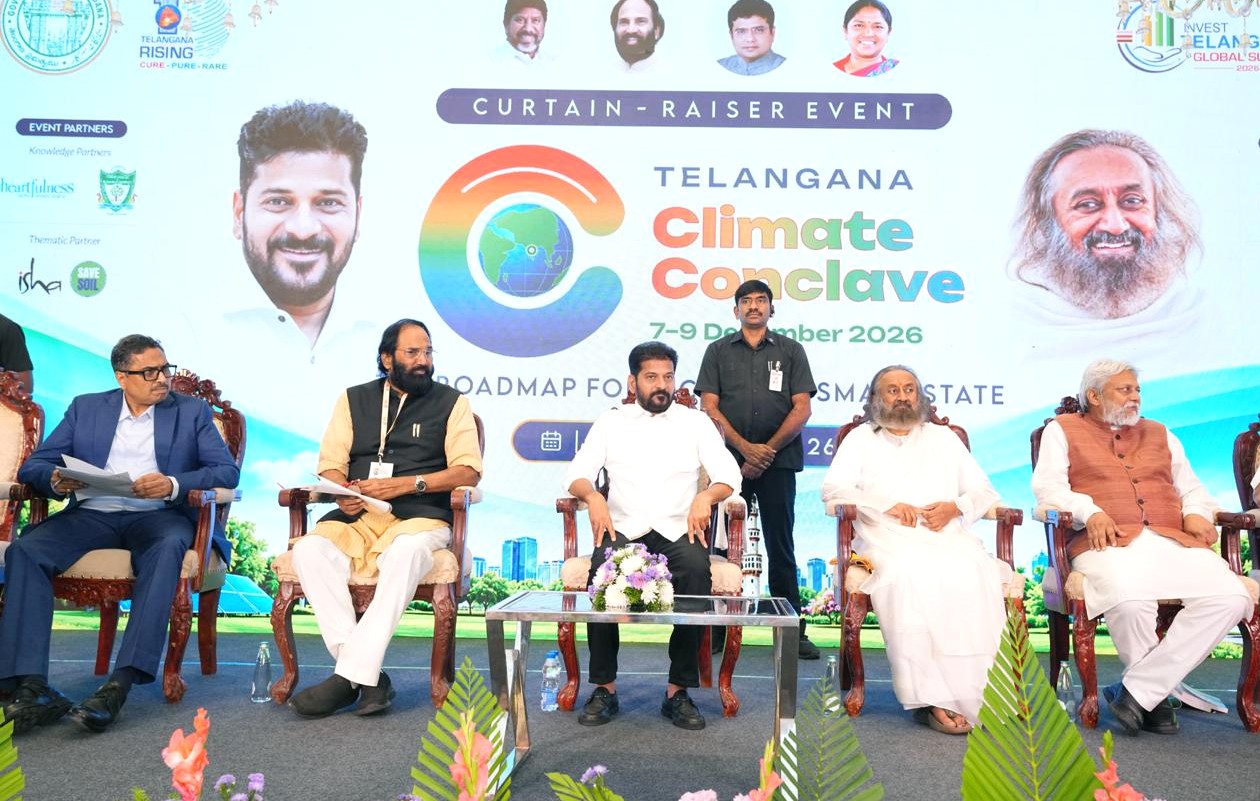
Addressing the curtain-raiser programme of the Telangana Climate Conclave, organised as part of Invest Telangana Global Summit 2026, the Chief Minister said environmental conservation and economic development must receive equal priority in the state's development agenda.
“The government has sufficient stocks of rice and foodgrains to meet people's requirements during drought conditions. But we do not have sufficient water,” Revanth Reddy said, expressing apprehension over rainfall prospects during the next eight months.
Unlike cyclones, floods and earthquakes, which cause immediate destruction, drought develops gradually before reaching devastating proportions, he said. The Chief Minister appealed to farmers to cooperate with the government in conserving water, suggesting that foregoing one crop could help protect livestock during severe water shortages.
He urged farmers to reconsider the cultivation of water-intensive crops and appealed to citizens to use available water resources judiciously. He maintained that farmers’ welfare remained the government’s foremost priority and stressed the need to rise above political differences in addressing the looming crisis.
However, the Chief Minister’s assertion regarding eight months without rainfall should be viewed as a warning rather than a definitive meteorological forecast. The Indian National Centre for Ocean Information Services (INCOIS), in its November 15 bulletin, projected strong El Niño conditions until March 2027, followed by predominantly neutral conditions between April and June.
Revanth Reddy said the forthcoming global investment summit would not be confined to industrial investments, business approvals and economic incentives but would also focus extensively on environmental sustainability.
Describing investments and environmental protection as the government's two eyes, he said Telangana would formulate a comprehensive environmental policy after consulting scientists, environmentalists, agricultural experts, farmers and grassroots representatives.
The Chief Minister recalled Telangana’s rich history of water conservation, highlighting the construction of irrigation tanks during the Kakatiya era, particularly Ramappa, Laknavaram and Pakhal. He also recalled the historic struggles of tribal communities for ‘Jal, Jangal, Jameen’.
Defending the establishment of the Hyderabad Disaster Response and Asset Protection Agency (HYDRAA), Revanth Reddy said hundreds of lakes in Hyderabad had disappeared over the decades due to encroachments and other factors.
He maintained that the government would continue removing illegal encroachments and restoring water bodies despite legal challenges and resistance from influential individuals. He cited the restoration of Bathukamma Kunta as an example of how environmental restoration could help revive traditional cultural practices.
On the Musi River rejuvenation project, the Chief Minister asserted that Telangana had its own historical legacy of water conservation and did not need to replicate Gujarat’s development model.
He said the government was committed to rejuvenating the entire river while providing alternative accommodation to economically disadvantaged families residing along its banks.
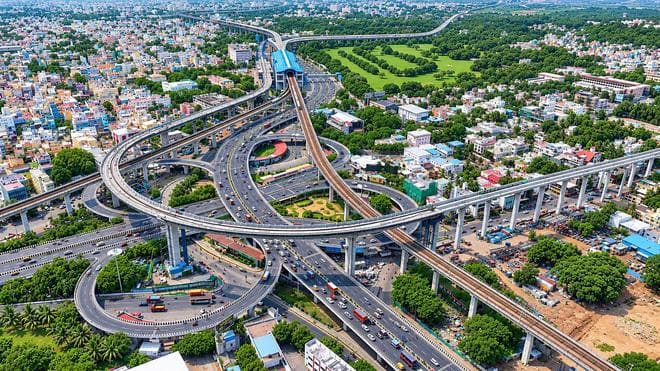
Highlighting Hyderabad’s vulnerability to urban flooding, Revanth Reddy said existing drainage infrastructure was inadequate to withstand extreme rainfall events and emphasised the need for comprehensive climate-resilient urban planning.
Speaking at the conclave, Irrigation Minister N. Uttam Kumar Reddy announced a proposed ₹10,000-crore El Niño and drought mitigation programme, scheduled to commence after Sankranti.
The initiative envisages undertaking works worth ₹2,000 crore every month over five months, focusing on rainwater harvesting, restoration of irrigation tanks and canals, groundwater recharge, agricultural field connectivity and rural infrastructure development.
Art of Living founder and Padma Vibhushan awardee Sri Sri Ravi Shankar welcomed Telangana’s environmental initiatives, emphasising that technological advancement must be accompanied by conservation of natural resources. He stressed the importance of restoring traditional water bodies.
Renowned environmentalist Rajendra Singh, popularly known as the ‘Waterman of India’, recommended supplying treated wastewater to industries during periods of water scarcity and undertaking comprehensive mapping of natural resources and cultural heritage.
Supporting HYDRAA’s efforts, Singh urged the government to accelerate the removal of encroachments on lakes and undertake the Musi rejuvenation project through a distinct Telangana-specific approach rather than replicating the Sabarmati riverfront model.
Minister D. Anasuya Seethakka, Padma Shri awardee and agricultural innovator Chintala Venkat Reddy, Chief Secretary Sanjay Jaju, Special Chief Secretary Jayesh Ranjan, environmentalists, scientists, farmers and elected representatives participated in the programme.
The Telangana Climate Conclave, scheduled from December 7 to 9 at Bharat Future City, will deliberate on drought mitigation, drinking water security, climate-resilient agriculture, biodiversity conservation, renewable energy and sustainable development, culminating in a long-term Telangana Climate Resilience Agenda.