Hyderabad faces 150 MGD water deficit as groundwater levels plunge; condition severe
Hyderabad is facing mounting water-supply concerns, with the Hyderabad Metropolitan Water Supply and Sewerage Board (HMWSSB) supplying around 585 million gallons per day (MGD) against an estimated daily requirement of 735 MGD, leaving a shortfall of approximately 150 MGD.
The deficit comes amid below-normal monsoon rainfall, declining groundwater levels and rising demand from the city’s expanding urban population. The water board’s jurisdiction now covers a 2,053-sq-km metropolitan region comprising the Greater Hyderabad, Cyberabad and Malkajgiri municipal corporations, placing additional pressure on existing supply infrastructure.
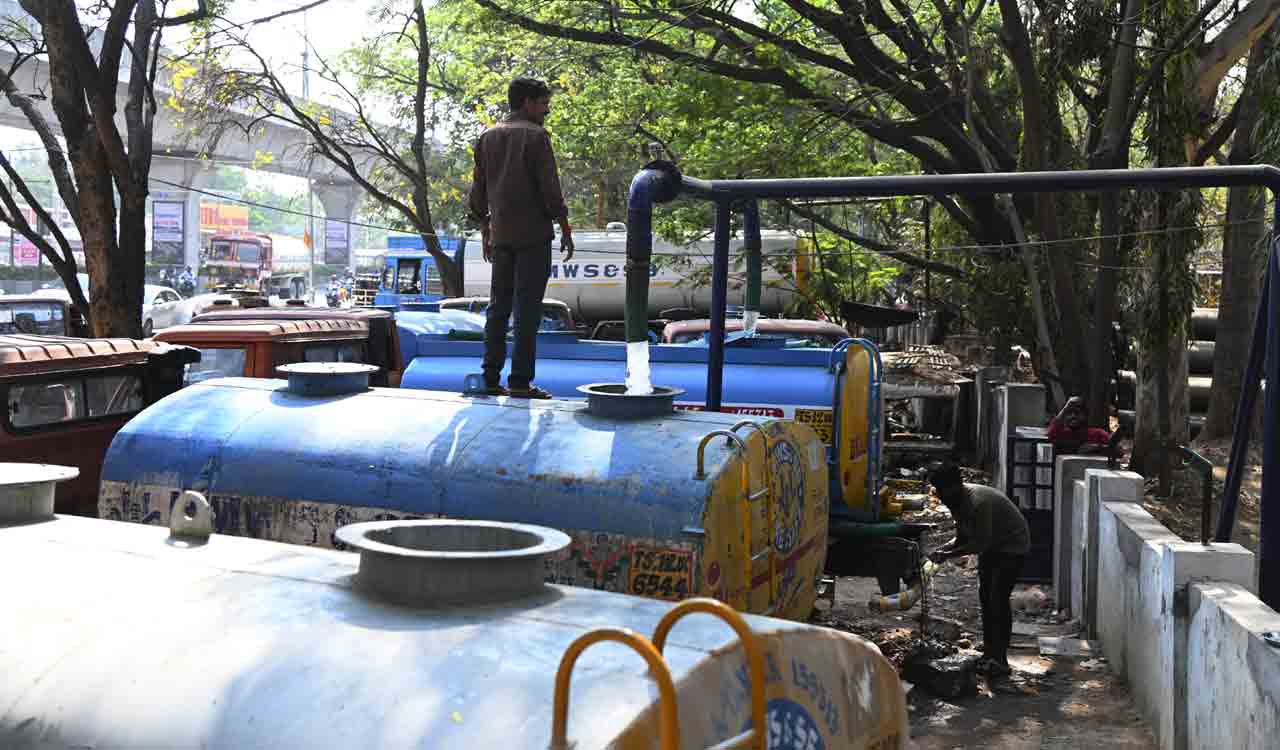
Groundwater depletion is emerging as a major concern, particularly in the city’s IT corridors and peripheral residential areas. Borewells that previously yielded water at depths of around 300 feet are reportedly running dry even after drilling to 800–1,000 feet in some locations. The situation has increased residents’ dependence on private water tankers.
The rainfall deficit has compounded the problem. Hyderabad recorded around 458.2 mm of rainfall against the normal 627.2 mm during the 2026–27 water year up to September, a shortfall of approximately 27%, according to groundwater department data cited in reports. The inadequate rainfall has limited replenishment of underground aquifers as the monsoon season draws to a close.
The city currently draws water from several sources, including Osman Sagar, Himayat Sagar, Singur, Manjeera, the Krishna river system through Akkampally and the Godavari system through Yellampalli. However, the combined daily draw from these sources remains below the projected requirement, highlighting the challenge of meeting demand across the expanded metropolitan area.
The pressure on groundwater is particularly significant for households in areas where municipal supply is limited or inconsistent. As water tables fall, deeper borewell drilling becomes more expensive and less reliable, while tanker dependence adds to household expenditure.
The HMWSSB is prioritising infrastructure upgrades, improvements to distribution networks and longer-term supply projects to address the demand-supply gap. With the next summer several months away, the availability of reservoir water, groundwater replenishment and the pace of infrastructure improvements will be critical to the city’s water security.
The emerging challenge for Hyderabad is to bridge the existing supply deficit while managing groundwater extraction and ensuring reliable drinking water for its rapidly growing population.
More from Telangana

More from Environment
NHAI begins survey for 43-km elevated corridor to Srisailam; night travel could become possible
Cyberabad Police plan one-way traffic loop to ease congestion in Hyderabad’s IT corridor near IKEA junction