Karnataka explores partnership with Kyndryl to strengthen examination security and expand AI-ready KEO computers
Karnataka Minister Priyank Kharge held discussions with a team from Kyndryl, one of the world's largest IT infrastructure services providers, on leveraging technology to strengthen public systems, with a particular focus on improving the security of public examinations and expanding the use of affordable, AI-ready computers in government educational institutions
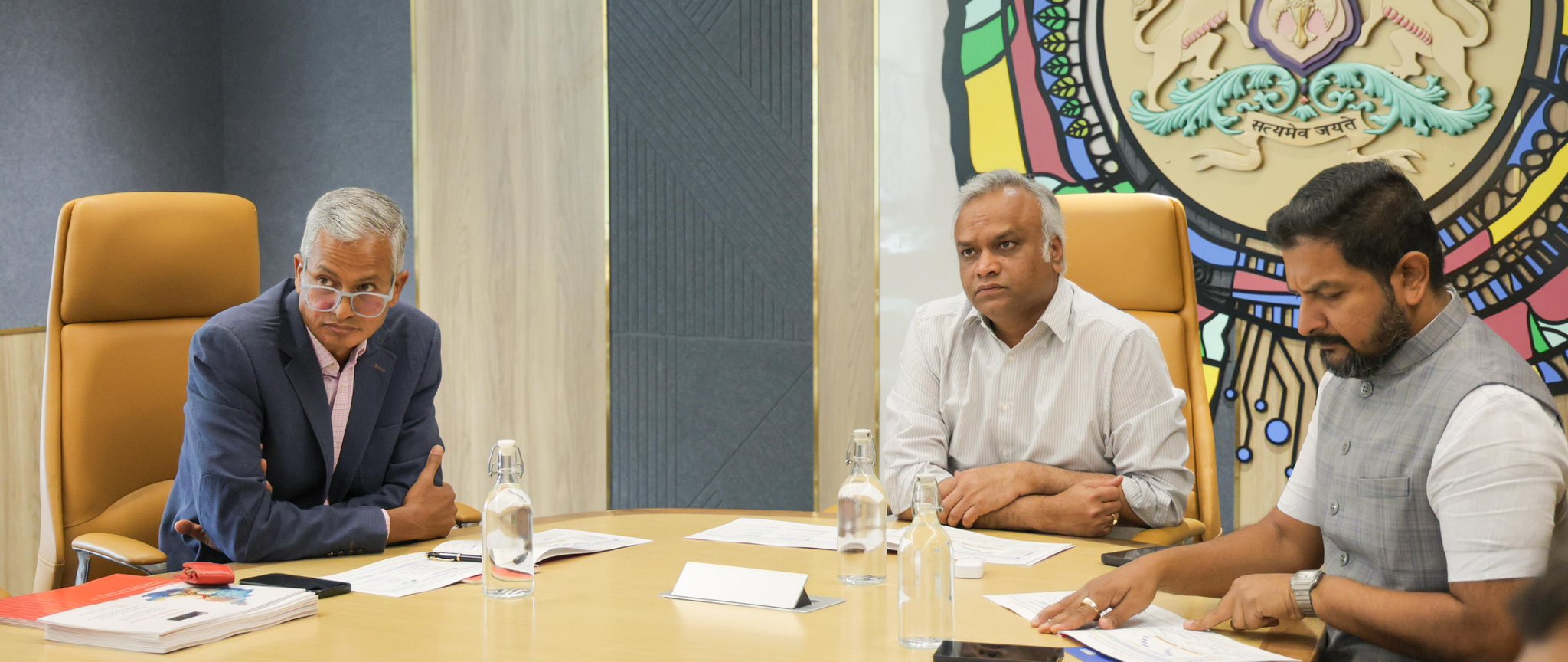
Sharing details of the meeting, Kharge said two key areas were discussed: strengthening the integrity of public examinations through technology-driven safeguards and increasing the adoption of KEO personal computers, developed by the Karnataka State Electronics Development Corporation Limited (KEONICS), across Karnataka Residential Educational Institutions Society (KREIS) schools and institutions.
A major focus of the discussions was the need to strengthen the examination process and minimise vulnerabilities at every stage. The Minister said the discussions explored how technology could be deployed to improve the integrity and security of public examinations, beginning with question paper preparation and secure handling, and extending through evaluation and the declaration of results.
The proposed approach seeks to introduce safeguards across multiple touchpoints to reduce the possibility of irregularities, improve accountability and ensure greater transparency in the examination system. The emphasis was on identifying potential vulnerabilities throughout the examination lifecycle rather than restricting security measures to the conduct of examinations alone.
The second area of discussion concerned the wider deployment and effective utilisation of KEO, an affordable, AI-ready personal computer developed by KEONICS. The government is exploring the possibility of expanding its adoption across KREIS schools and other educational institutions to improve access to technology.
Kharge said the discussions also covered the need to develop a clear business case for a statewide rollout. This would include assessing the financial implications, technical support requirements, scalability and long-term sustainability of the initiative.
An important consideration is positioning KEO as a cost-effective alternative to conventional technology systems, particularly those involving recurring software licensing expenses. The objective is to examine whether the government can provide affordable computing infrastructure while reducing long-term technology costs.
The proposed expansion would also require a robust support mechanism to ensure that institutions can effectively use and maintain the devices.
The discussions with Kyndryl reflect Karnataka's efforts to explore technology partnerships that can improve the delivery of public services and strengthen digital infrastructure in education and administration. While the meeting focused on exploring potential areas of collaboration, a detailed business case and implementation framework would be necessary before any statewide rollout or technology deployment is finalised.
More from Karnataka

Padma Shri Dr B. Raman Rao enters Guinness World Records for treating over 33 lakh patients over 2777 Sundays

Karnataka CM Shivakumar inaugurates community hall with modern gym, badminton court in Bengaluru

BDA Chairman N.A. Haris joins citizens in Bengaluru Park cleanliness drive, calls for a green movement
More from Business

Shree Cement unveils ₹7,000 crore investment plans for three cement plants in Andhra Pradesh

Aster DM Quality Care invests ₹500 crore in 300-bed multispecialty hospital at Hyderabad’s Kondapur