KBR Park project scrapped: Did political VIP properties trigger the U-turn?
The Telangana government’s decision to scrap the earlier plan for multiple flyovers and underpasses around Kasu Brahmananda Reddy (KBR) National Park has triggered political allegations that the project was withdrawn to avoid affecting properties belonging to influential individuals.
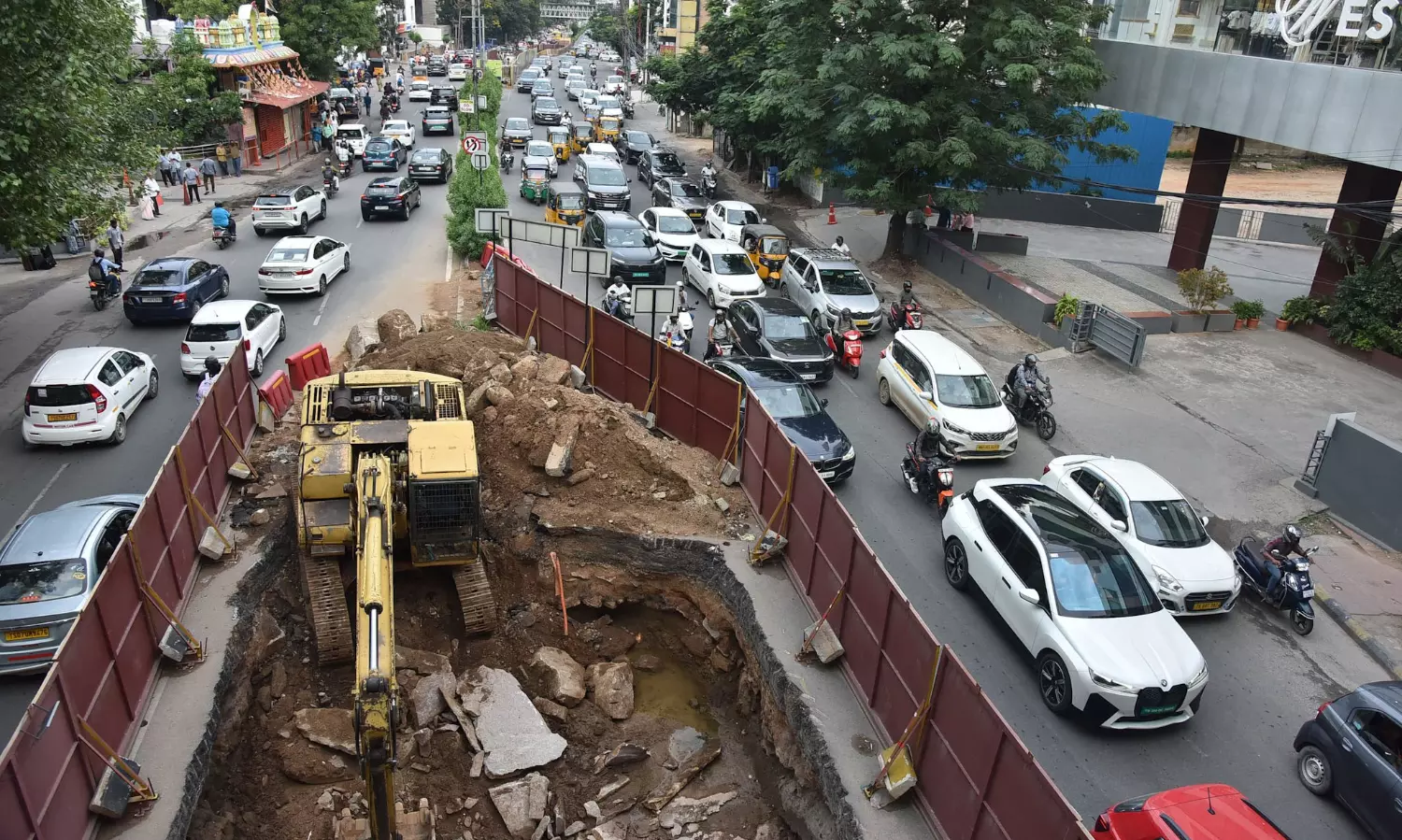
The allegations have circulated on social media, with claims that the original project would have affected properties associated with former Congress leader K. Jana Reddy, Union minister Renuka Chowdary, actor Nandamuri Balakrishna and other prominent individuals. These claims have not been independently established.
The government has officially cited changes in traffic conditions and the effectiveness of the recently introduced one-way traffic system around KBR Park as a reason for revising the earlier plan. The original proposal involved 14 projects — seven flyovers and seven underpasses — estimated at about ₹1,090 crore.
The revised plan now envisages a 4.3-km, six-lane bidirectional steel elevated corridor from Jubilee Hills Checkpost to NFCL Junction, with the project estimated at about ₹1,090 crore.
Property acquisition was also reportedly a significant consideration in revisiting the earlier design. Reports have indicated that the original alignment would have required acquisition of a substantial number of properties, including some owned by politicians and other prominent persons.
The social-media allegations, however, go further by suggesting that the project was specifically abandoned to protect properties belonging to political leaders and celebrities. There is currently no publicly established evidence that the government cancelled or redesigned the project for that reason.
The revised elevated corridor is expected to retain the one-way traffic arrangement around KBR Park while providing signal-free movement between major junctions. The government has said the change is intended to reduce the need for extensive land acquisition while addressing traffic congestion.
More from Telangana
More from Dakshin
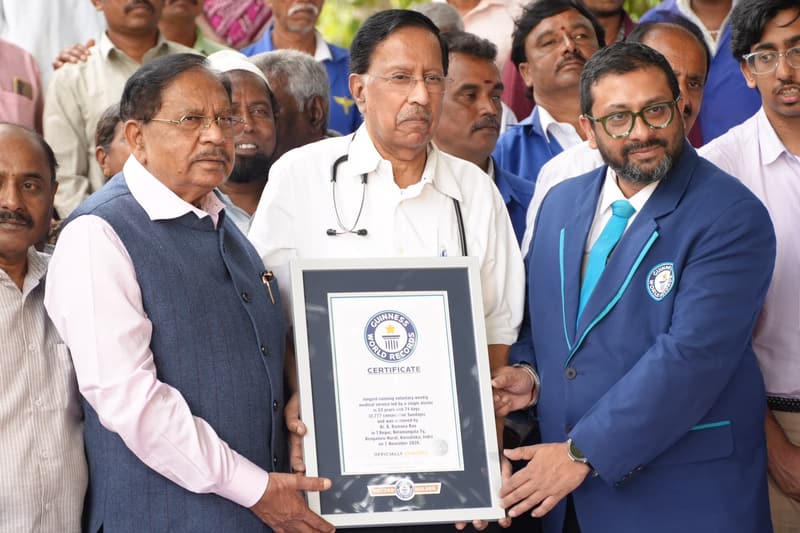
Padma Shri Dr B. Raman Rao enters Guinness World Records for treating over 33 lakh patients over 2777 Sundays
Shree Cement unveils ₹7,000 crore investment plans for three cement plants in Andhra Pradesh