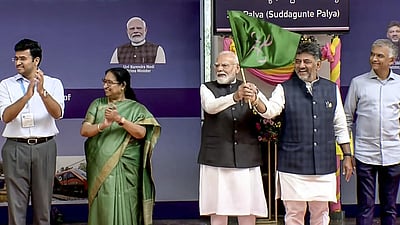
PM Modi inaugurates Bengaluru Metro Pink Line, takes first ride with CM D.K. Shivakumar
Prime Minister Narendra Modi inaugurated the much-awaited Pink Line service of Bengaluru's Namma Metro on Friday, November 13, marking another milestone in the expansion of the city's urban transport network. The Prime Minister also travelled on the newly inaugurated corridor alongside Karnataka Chief Minister D.K. Shivakumar
The inauguration represents an important step towards strengthening public transport connectivity in southern Bengaluru, particularly in areas that have experienced rapid residential and commercial growth. The Pink Line is expected to provide commuters with an alternative to road travel along some of the city's heavily congested routes.
The newly inaugurated elevated section connects Kalena Agrahara with the Tavarekere–SG Palya stretch, serving important residential neighbourhoods, commercial establishments and educational institutions. The corridor forms part of the larger Pink Line project, which will eventually connect Kalena Agrahara in southern Bengaluru with Nagawara in the north.
The Prime Minister's metro journey with Shivakumar also drew attention, bringing together the BJP-led Central government and the Congress-led Karnataka administration at a major infrastructure event. The occasion highlighted the importance of coordination between the Centre and the state in implementing large-scale urban transport projects.
The Pink Line is among Bengaluru's most significant metro expansion projects, combining elevated and underground sections to connect several densely populated areas. Once the entire corridor becomes operational, it is expected to improve access to important locations, including Bannerghatta Road, Dairy Circle, MG Road and Nagawara, while providing additional interchange opportunities with the existing metro network.
For residents of southern Bengaluru, the commencement of services is particularly significant. The corridor is expected to benefit office-goers, students, business establishments and daily commuters who currently depend on private vehicles, buses and other road-based transport.
Bengaluru's continuing expansion as a technology and commercial hub has placed enormous pressure on its road infrastructure. Traffic congestion, lengthy commuting times and rising vehicle density have made metro connectivity an increasingly important component of the city's long-term mobility strategy.
The Pink Line is being developed under Phase 2 of the Bengaluru Metro Rail Corporation Limited's expansion programme. Its completion is expected to strengthen the integration of different parts of the city and reduce dependence on private transport along key corridors.
While the inauguration marks the beginning of passenger services on the elevated section, the remaining underground portion of the Pink Line is essential to unlocking the full benefits of the project. Its eventual integration with other metro corridors will determine the extent to which commuters can travel seamlessly across Bengaluru.
The inauguration also comes amid growing expectations that Bengaluru's expanding metro network will help address the city's persistent traffic problems. However, the effectiveness of the new service will depend on operational frequency, last-mile connectivity, feeder transport and the timely completion of the remaining sections.
With the Pink Line entering service, Bengaluru has taken another step towards building a more extensive mass rapid transit system, offering commuters the prospect of faster, more predictable and environmentally sustainable urban travel.
More from Karnataka
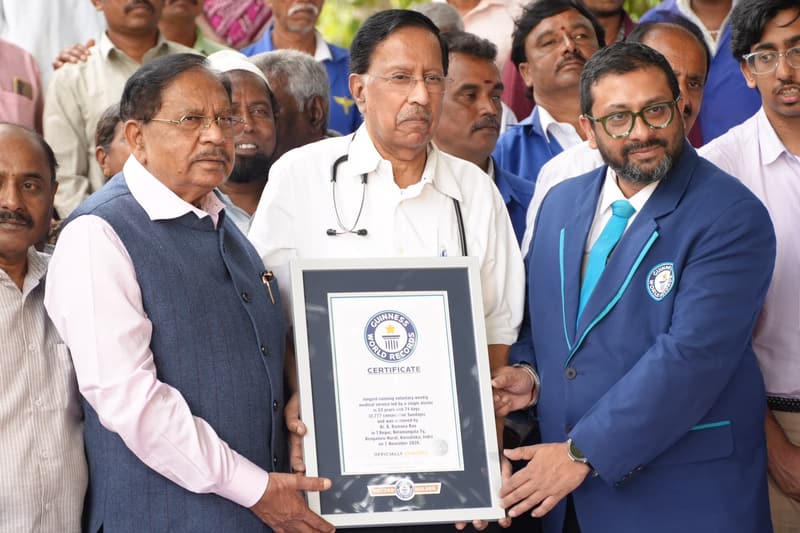
Padma Shri Dr B. Raman Rao enters Guinness World Records for treating over 33 lakh patients over 2777 Sundays
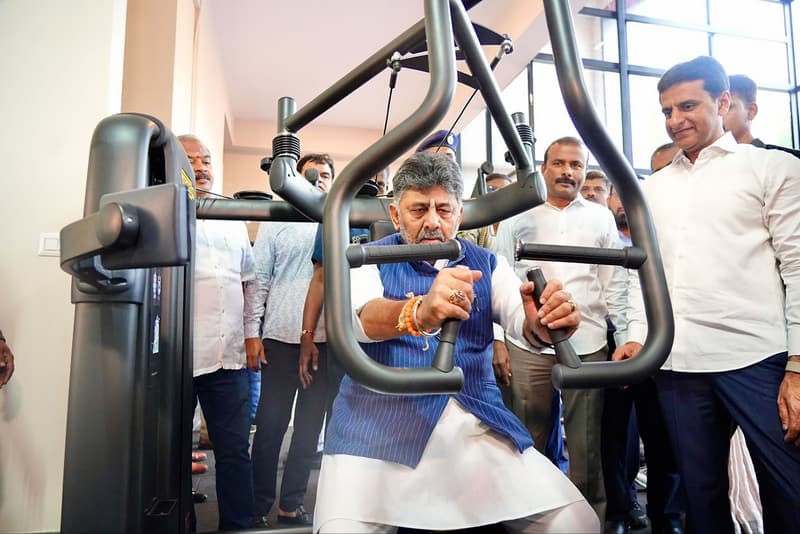
Karnataka CM Shivakumar inaugurates community hall with modern gym, badminton court in Bengaluru
BDA Chairman N.A. Haris joins citizens in Bengaluru Park cleanliness drive, calls for a green movement
More from Environment

NHAI begins survey for 43-km elevated corridor to Srisailam; night travel could become possible
Cyberabad Police plan one-way traffic loop to ease congestion in Hyderabad’s IT corridor near IKEA junction