Polavaram spillway handles nearly 15 lakh cusecs as Godavari floods highlight engineering challenges
The Polavaram project on the Godavari River has witnessed major flood discharges over the past eight years, highlighting the challenges of managing the river’s powerful and fluctuating flows during the monsoon season.
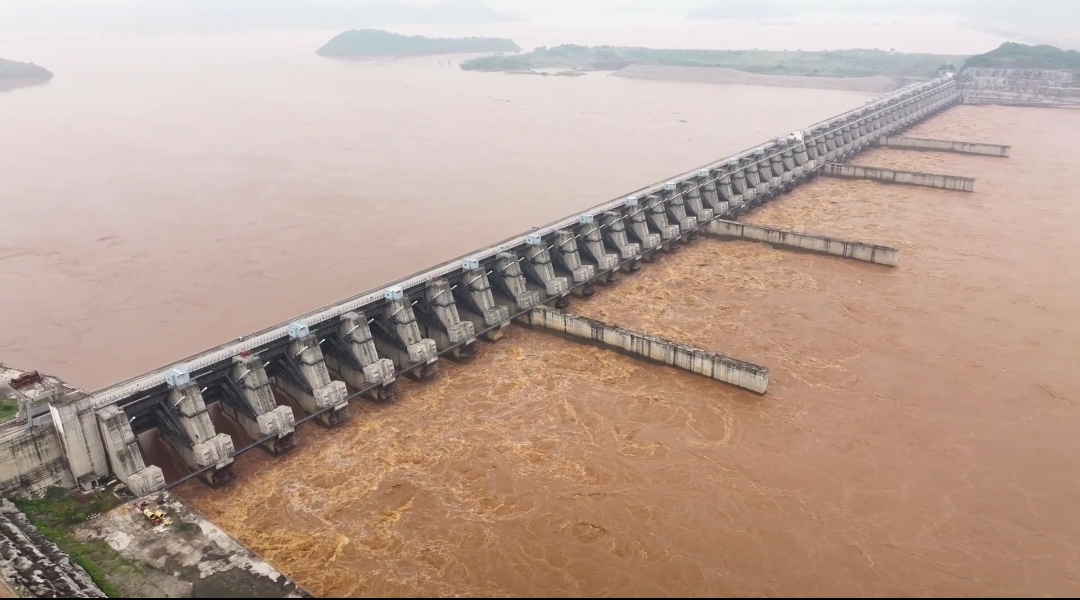
According to figures cited in a recent compilation, peak flows recorded at the project ranged from around 10 lakh cusecs to more than 22 lakh cusecs between 2019 and 2026. The highest figure listed was 22.15 lakh cusecs on August 18, 2020, followed by 20.92 lakh cusecs on July 16, 2022.
The compilation also records a discharge of 14.86 lakh cusecs through the Polavaram spillway at 9 am on August 2, 2026. The figure indicates the scale of water passing through the project during a period of heavy river flows.
However, the historical figures require careful interpretation. The 2019 and 2020 measurements reportedly relate to the upstream cofferdam, while later records refer to the spillway or project discharge. Inflow and outflow figures can also differ, making direct year-on-year comparisons difficult without consistent measurement data.
The Polavaram spillway, which is 1,118.4 metres long, has a design discharge capacity of approximately 50 lakh cusecs, equivalent to the project’s probable maximum flood design. Its role is central to regulating and conveying large volumes of Godavari water downstream.
The varying flood levels underline the importance of accurate monitoring, effective flood management and continuous assessment of project infrastructure. A reliable comparison of annual peaks, however, requires official records that specify the date, measurement location and type of discharge for each event.
More from Andhra Pradesh
Shree Cement unveils ₹7,000 crore investment plans for three cement plants in Andhra Pradesh

AP plans ₹25,000 crore space manufacturing ecosystem, secures major investments in rocket technology

Manchu Manoj named Andhra Yuva Sankalp 2K26 Ambassador; initiative reaches all 28 AP districts
More from Environment

NHAI begins survey for 43-km elevated corridor to Srisailam; night travel could become possible

Cyberabad Police plan one-way traffic loop to ease congestion in Hyderabad’s IT corridor near IKEA junction