South India’s economic powerhouses: Telangana’s Ranga Reddy tops India’s richest districts ranking
South India’s growing economic strength is reflected in a ranking of India’s wealthiest districts by per capita Gross Domestic Product (GDP), with Telangana’s Ranga Reddy district taking the top spot and Karnataka featuring prominently through Bengaluru Urban and Dakshina Kannada.
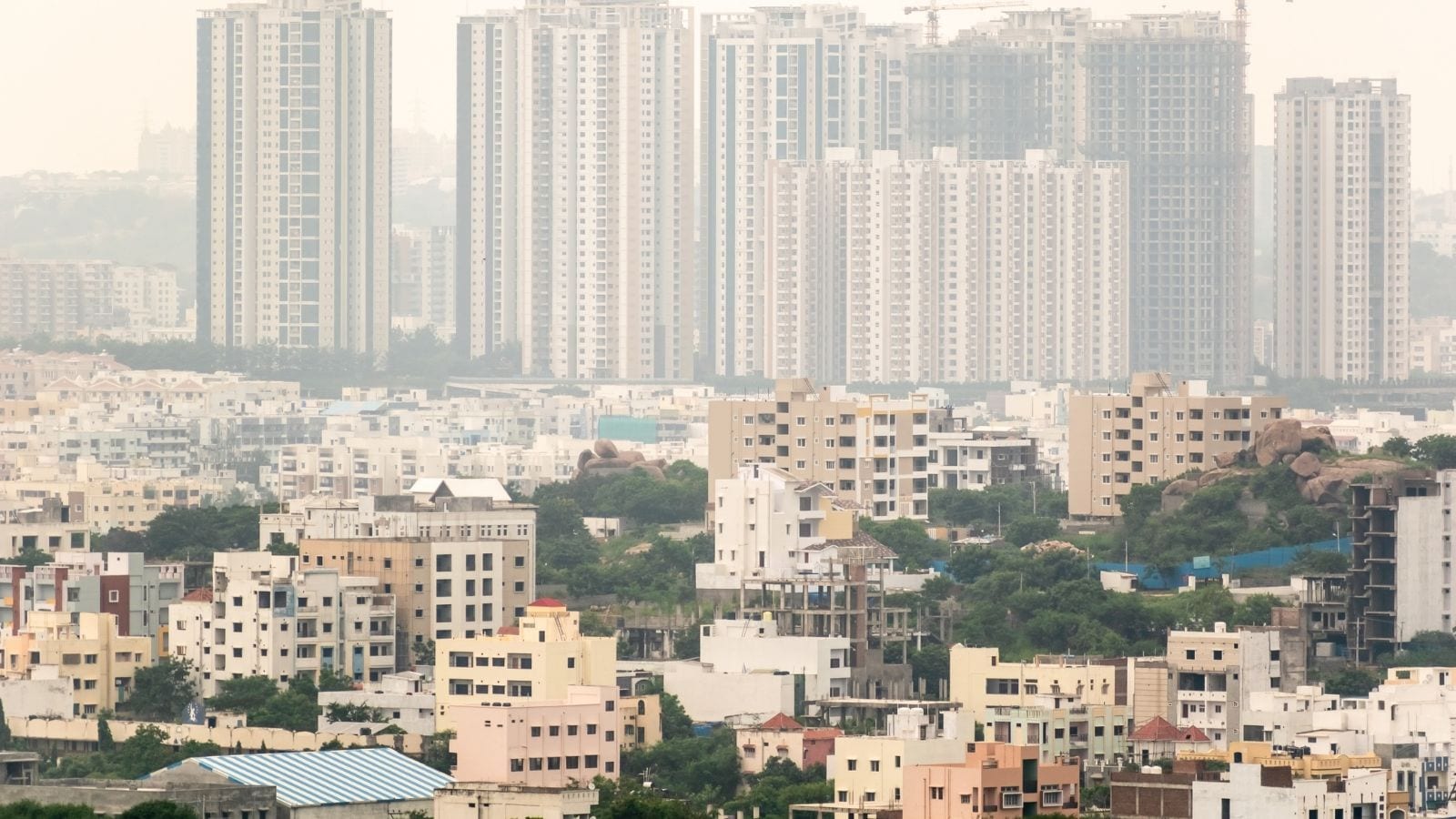
According to figures circulated alongside the Economic Survey 2024–25, Ranga Reddy recorded an estimated per capita GDP of ₹11.46 lakh, placing it ahead of Gurugram in Haryana at ₹9.05 lakh and Bengaluru Urban at ₹8.93 lakh. Gautam Buddha Nagar in Uttar Pradesh and Solan in Himachal Pradesh occupied the next positions.
The ranking highlights the concentration of economic activity around technology centres, industrial clusters, corporate hubs, manufacturing centres and specialised service economies. However, per capita GDP measures economic output relative to population; it does not mean that every resident earns that amount.
Ranga Reddy’s position at the top reflects the expansion of Hyderabad’s metropolitan economy beyond the city’s traditional boundaries. The district has benefited from the growth of information technology, pharmaceuticals, biotechnology, commercial real estate, manufacturing and logistics.
The wider Hyderabad region has attracted multinational companies, technology campuses and research-oriented businesses. As the city expands, surrounding areas have increasingly become part of its economic ecosystem, attracting investment and supporting employment across several sectors.
Ranga Reddy’s performance illustrates how metropolitan growth can transform neighbouring districts into major centres of economic output. Its top position is also a reminder of Telangana’s increasing importance in India’s technology and pharmaceutical industries.
Bengaluru Urban ranks third, with an estimated per capita GDP of ₹8.93 lakh. The district’s economic strength is closely associated with information technology, software services, start-ups, research, professional services and the presence of major domestic and international companies.
Dakshina Kannada, ranked eighth in the published national list, offers a different model of prosperity. Centred on Mangaluru, the district benefits from port-related activity, trade, education, healthcare, banking and other services. Its performance shows that economic strength is not confined to large technology capitals; districts with strong educational institutions, commercial networks and infrastructure can also generate substantial economic output.
Gurugram’s second-place position reflects the concentration of corporate offices, information technology and business services in the National Capital Region. Gautam Buddha Nagar, which includes Noida and Greater Noida, has developed into a major centre for technology, manufacturing, commercial real estate and services.
Solan in Himachal Pradesh demonstrates that smaller districts can also record high per capita output through industrial activity and specialised economic sectors. Goa and Sikkim feature in the published comparison as well, although the figures group multiple districts in each state rather than representing individual districts on a directly comparable basis. Mumbai’s presence reflects its longstanding role as a financial and commercial centre.
The list circulating on social media requires a qualification. In the widely published 2025 ranking based on Economic Survey 2024–25 figures, North and South Goa were grouped together, as were four districts of Sikkim. Ahmedabad was listed tenth, while Dakshina Kannada and Mumbai were ranked eighth and ninth, respectively. The ranking should therefore not be reproduced as a definitive list of ten individual districts without clarifying these differences.
The ranking is an important indicator of where economic output is concentrated, but it does not reveal how evenly that output is distributed among residents. High per capita GDP can coexist with income inequality, expensive housing, uneven access to public services and disparities between urban and rural communities.
For South India, the broader challenge is to ensure that investment and economic expansion create jobs, strengthen local businesses, improve infrastructure and raise living standards across communities.
Ranga Reddy’s national lead and Karnataka’s strong representation demonstrate the region’s economic dynamism. The next measure of success will be how effectively this economic output translates into inclusive and sustainable development.
More from Telangana


More from Business
Shree Cement unveils ₹7,000 crore investment plans for three cement plants in Andhra Pradesh

Aster DM Quality Care invests ₹500 crore in 300-bed multispecialty hospital at Hyderabad’s Kondapur