Three Indian-origin tech giants emerge as contenders to replace Nvidia CEO Jensen Huang after explosive scandal
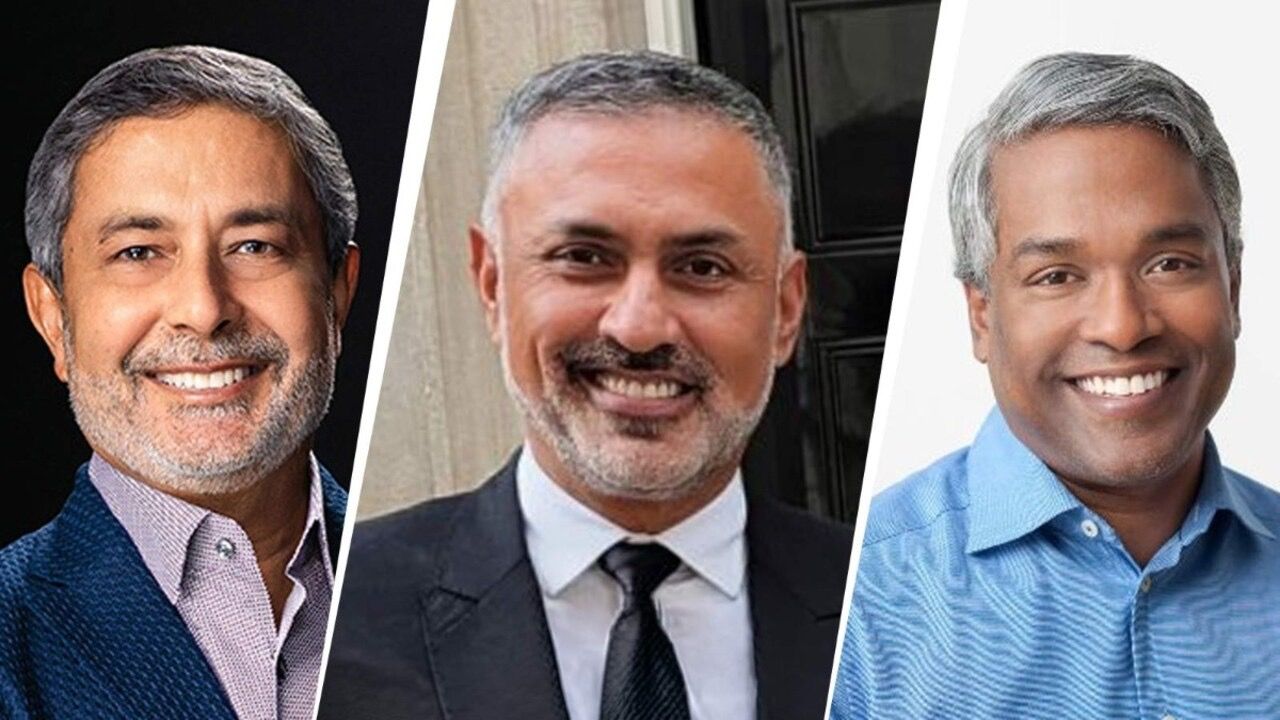
Three prominent Indian-origin technology executives — Sanjay Mehrotra of Micron Technology, Nikesh Arora of Palo Alto Networks and Thomas Kurian of Google Cloud — have emerged as potential contenders to lead Nvidia following the sudden resignation of its co-founder and long-serving CEO Jensen Huang
Huang stepped down on November 12, 2026, ending a remarkable 33-year tenure during which he transformed Nvidia from a graphics-chip manufacturer into a global powerhouse at the centre of the artificial intelligence revolution. The company confirmed his resignation as president, chief executive and board member, appointing Chief Financial Officer Colette Kress as interim CEO.
The leadership crisis follows revelations about Huang's extramarital relationships, including allegations involving a Chinese businesswoman suspected by US authorities of intelligence links to Beijing. Nvidia had announced an independent investigation on November 8, while maintaining that it had no reason to believe national security or company secrets had been compromised. The espionage allegations remain unproven, and China has rejected them.
The controversy has triggered uncertainty at one of the world's most influential technology companies, whose advanced processors power artificial intelligence systems, cloud infrastructure and high-performance computing across the globe.
Sanjay Mehrotra — CEO, Micron Technology: Mehrotra is regarded as a strong potential candidate because of his extensive experience in semiconductor technology, manufacturing and global supply chains. A co-founder of SanDisk, he helped build the company into a major player in flash memory before becoming CEO of Micron Technology in 2017.
His understanding of semiconductor development and memory technologies could be particularly valuable to Nvidia, whose AI accelerators depend heavily on advanced memory systems.
Mehrotra's engineering background and experience managing complex semiconductor operations make him a credible contender for a company facing intense technological competition.
Nikesh Arora — Chairman and CEO, Palo Alto Networks: Arora brings a different set of strengths, particularly in global business management, cybersecurity and enterprise technology.
Before joining Palo Alto Networks, he held senior leadership positions at Google and SoftBank, developing considerable experience in managing large international businesses.
His leadership of Palo Alto Networks has strengthened his reputation as a technology executive capable of navigating rapidly changing markets. His experience in cybersecurity could also be relevant as Nvidia faces questions involving corporate governance, technology security and geopolitical risks.
However, unlike Mehrotra, Arora does not have the same depth of direct semiconductor manufacturing experience.
Thomas Kurian — CEO, Google Cloud: Kurian is another prominent name in the succession discussion, bringing extensive experience in enterprise software, cloud computing and artificial intelligence infrastructure.
Before taking charge of Google Cloud in 2019, Kurian spent more than two decades at Oracle, where he held senior executive responsibilities.
At Google Cloud, he has overseen the expansion of cloud services and enterprise AI offerings, positioning himself as an influential leader in the technology ecosystem.
His experience could be particularly relevant as Nvidia increasingly operates at the intersection of AI hardware, software platforms, cloud computing and enterprise infrastructure.
Kurian's understanding of the requirements of major cloud customers could help Nvidia strengthen relationships with technology companies investing billions of dollars in AI infrastructure.
Colette Kress takes charge as Nvidia searches for permanent CEO: While speculation surrounds the three Indian-origin executives, Nvidia has entrusted interim leadership to Colette Kress, who has served as its Chief Financial Officer since 2013.
Kress has played an important role in Nvidia's financial management during its transformation into an AI industry leader. The company's board has indicated that it will consider both internal and external candidates for the permanent leadership position.
Harvey C. Jones has meanwhile been appointed Nvidia's first-ever Chairman of the Board, marking another significant change in its governance structure.
The succession decision comes at a critical time for Nvidia. The company occupies a dominant position in advanced AI computing, with its graphics processing units forming the backbone of many of the world's largest AI systems.
Huang's departure has raised concerns about leadership continuity, investor confidence, geopolitical pressures and the future direction of the company's technology strategy.
The controversy has also attracted attention because of the strategic importance of advanced semiconductors in the technological rivalry between the United States and China.
Whoever succeeds Huang will inherit not only a highly valuable technology business but also the responsibility of navigating export restrictions, semiconductor supply-chain challenges and competition in the rapidly evolving AI industry.
The emergence of Mehrotra, Arora and Kurian in succession discussions highlights the influence of Indian-origin executives in global technology leadership.
However, Nvidia has not officially identified any of the three executives as shortlisted candidates, and their names remain part of media speculation rather than a confirmed selection process.
For Nvidia, the immediate priority is to restore stability and reassure investors, customers and governments that its technological roadmap and commercial commitments will remain intact despite the unprecedented leadership transition.
More from Beyond Dakshin

Sai Pallavi cuts her hair for ‘OM’, takes inspiration from IPS officer Merin Joseph; mother reacts in shock
Mahesh Babu–Rajamouli’s ‘Varanasi’ eyes record ₹290 crore Telugu States deal, set to surpass ‘RRR’
Allu Arjun lines up mythological pan-India spectacle with Boyapati Sreenu after ‘Raaka’!
More from Business
Shree Cement unveils ₹7,000 crore investment plans for three cement plants in Andhra Pradesh
Aster DM Quality Care invests ₹500 crore in 300-bed multispecialty hospital at Hyderabad’s Kondapur