TVS family feud erupts: Lakshmi Venu demands equal share in family assets, challenges patriarchy
A major family dispute has emerged within the influential TVS business family, with Lakshmi Venu issuing a formal legal notice seeking partition of her father Venu Srinivasan's interests in several prominent group companies, including TVS Holdings, TVS Motor Company, TVS Credit Services and Sundaram-Clayton

Lakshmi Venu, a prominent business leader and daughter of industrialist Venu Srinivasan, has asserted her legal right to an equal share in the joint family property under the Hindu Succession Act, arguing that patriarchal practices cannot override the inheritance rights guaranteed to daughters.
The legal notice reportedly calls upon Venu Srinivasan to fulfil his fiduciary obligations and initiate a fair and lawful partition of the family's assets. Lakshmi has maintained that she possesses an independent legal right to seek partition and cannot be denied her rightful entitlement merely because she is a daughter.
In a strongly worded assertion, Lakshmi Venu has reportedly emphasised that patriarchy has no place in the law or in a progressive India, placing the issue of gender equality and inheritance rights at the centre of the family dispute.
According to the claims outlined in the notice, no settlement or formal partition of assets within her immediate family had ever been initiated or completed. She has therefore sought a legal division of the joint family property, including her father's interests in major TVS Group businesses.
The companies identified in the notice are among the significant enterprises associated with the TVS business family. TVS Motor Company is one of India's leading two-wheeler manufacturers, while TVS Credit Services operates in the financial services sector. TVS Holdings and Sundaram-Clayton are also important entities within the family's corporate structure.
Lakshmi Venu is herself an established corporate executive with extensive involvement in the family's automotive businesses. She has held leadership responsibilities at Sundaram-Clayton and has been closely associated with the group's manufacturing operations and international business development.
Her father, Venu Srinivasan, is one of India's most prominent industrialists and has played a pivotal role in transforming TVS Motor into a major automobile manufacturer with a substantial international presence.
The dispute could attract considerable attention in corporate India, particularly because it raises questions about succession planning, ownership structures and the inheritance rights of women in large family-controlled business groups.
Under the Hindu Succession (Amendment) Act, 2005, daughters have equal coparcenary rights alongside sons in qualifying Hindu joint family property. However, the application of these provisions to specific family assets, shareholdings and corporate structures depends on their legal ownership and classification.
Lakshmi Venu's demand for partition does not automatically imply a division of the assets of the listed companies themselves. The legal question concerns the nature and extent of the family's ownership interests and whether those interests constitute property subject to partition.
The development places one of southern India's most established industrial families under scrutiny, with potential implications for family governance and succession arrangements.
There has been no independently verified public response from Venu Srinivasan to the reported legal notice. The allegations and legal claims remain Lakshmi Venu's stated position, and no judicial determination of her entitlement has been reported.
The dispute is expected to draw attention from corporate observers and legal experts as the parties consider their next steps.
More from Tamil Nadu

More from Business
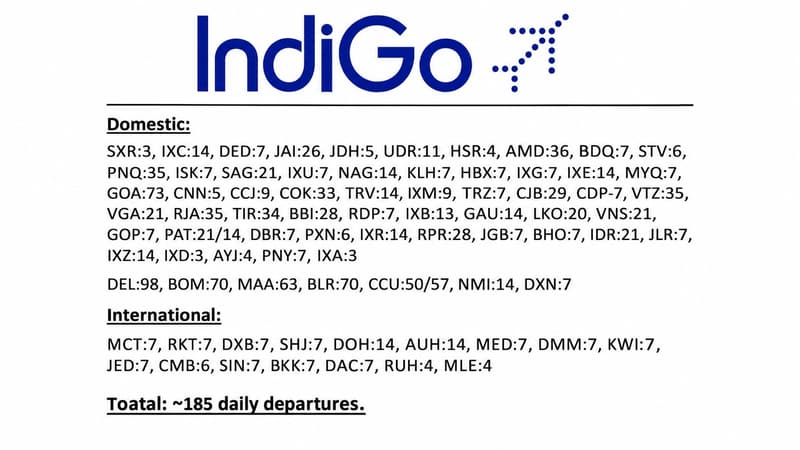
IndiGo plans major December expansion at Hyderabad Airport, targets 1,300 weekly departures
Bengaluru startups raise $85 billion, account for 47% of India’s venture funding: Innovation Report 2026