DMK MPs Meet Amit Shah, Delimitation Bill Gets Major Boost; BJP Confident of Two-Thirds Majority
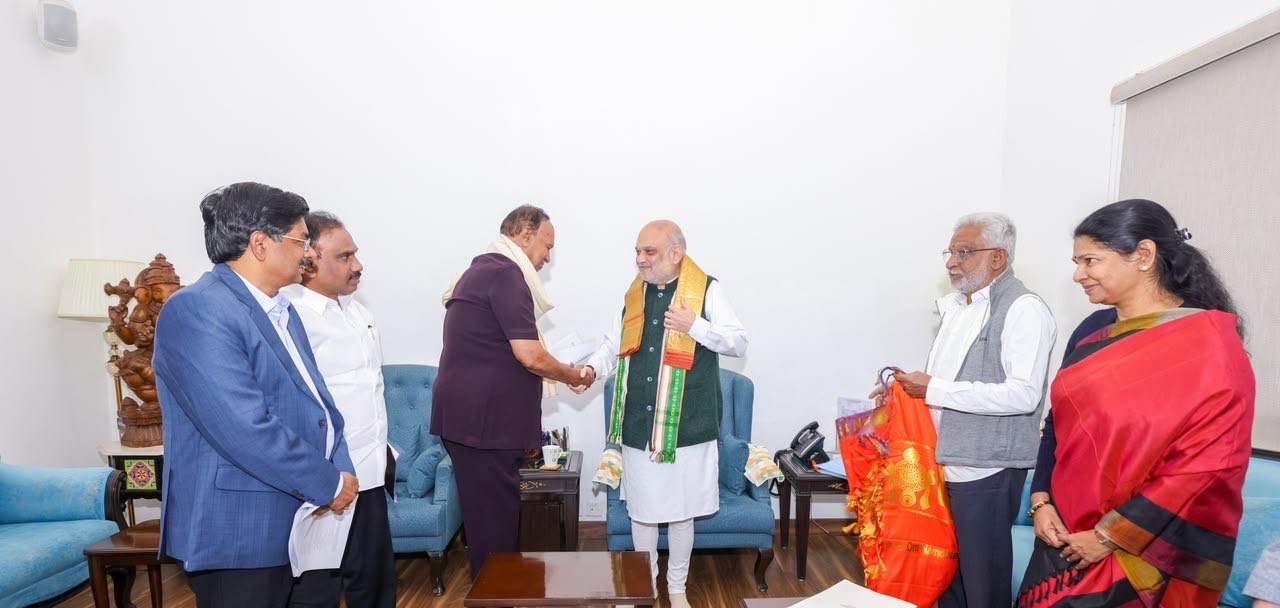
In a significant political development ahead of the special session of Parliament, a delegation of Dravida Munnetra Kazhagam (DMK) MPs, including Kanimozhi Karunanidhi and A. Raja, met Union Home Minister Amit Shah, giving fresh momentum to the BJP-led government’s efforts to secure parliamentary approval for the proposed constitutional amendment on delimitation
The meeting assumes significance against the backdrop of the Centre’s revised proposal to increase Lok Sabha seats uniformly by 50 per cent across states, addressing longstanding concerns among southern political parties over a population-based redistribution of parliamentary constituencies.
The Narendra Modi-led government is reportedly confident of securing the two-thirds majority required to pass the constitutional amendment, with the support of the DMK expected to significantly strengthen its parliamentary numbers.
The DMK delegation, which also included senior parliamentarians T.R. Baalu, Dayanidhi Maran and P. Wilson, met Shah at his official residence on Saturday evening to formally convey the party’s decision to support the legislation.
The meeting followed a resolution adopted earlier in the day at a gathering of DMK parliamentarians chaired by party president and former Tamil Nadu Chief Minister M.K. Stalin at Anna Arivalayam, the party headquarters in Chennai.
Speaking to reporters after the meeting, Kanimozhi said the Centre had incorporated the principal demands raised by the DMK, including retaining the 1971 Census-based formula for inter-state parliamentary representation and extending the freeze on the relative allocation of seats for another 25 years.
Defending the party’s decision, Stalin maintained that the DMK had succeeded in safeguarding Tamil Nadu’s parliamentary representation and protecting the political interests of southern states that had successfully implemented population stabilisation programmes.
Under the revised proposal, Tamil Nadu’s Lok Sabha representation would increase from the existing 39 seats to 59, with its proportionate share marginally increasing from 7.18 per cent to 7.21 per cent.
Senior DMK leader and former Union Minister A. Raja maintained that the party had not deviated from its original position on delimitation. He said its opposition had been directed against an inequitable population-based redistribution of seats rather than delimitation itself.
The DMK leadership argued that rejecting the revised proposal could leave southern states vulnerable to a future redistribution of parliamentary constituencies based on more recent population figures.
The developments have also brought the widening political divide between the DMK and its former ally, the Congress, into sharp focus.
Relations between the two parties deteriorated following the Congress's decision to extend support to Chief Minister Vijay and his Tamilaga Vettri Kazhagam (TVK), which formed the government in Tamil Nadu in May.
DMK leaders criticised the Congress over its political approach and accused it of treating its regional allies as politically expendable.
Dayanidhi Maran questioned the Congress leadership’s conduct towards its former allies, accusing the national party of following a “use-and-throw policy”.
A. Raja also criticised the Congress for failing to offer a concrete alternative to the delimitation formula despite its repeated demands for an equitable exercise.
The Congress, meanwhile, questioned the DMK’s decision to support the legislation. Senior Congress leader Shashi Tharoor expressed disappointment, arguing that the Dravidian party was overlooking the BJP’s broader political agenda and compromising its traditional advocacy of states’ rights.
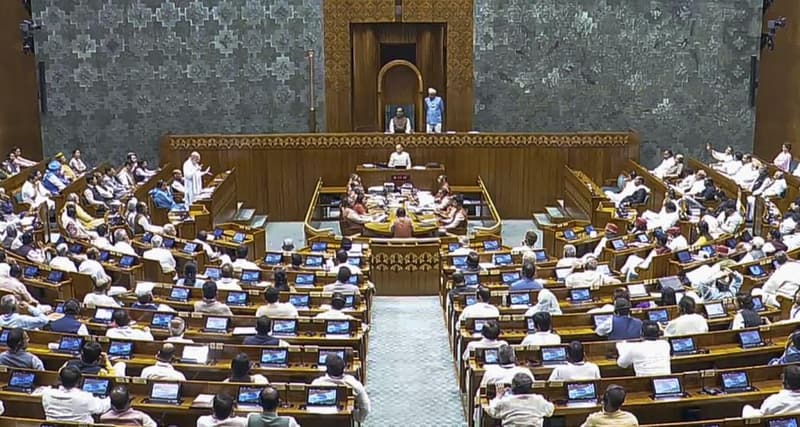
In another politically significant development, the Lok Sabha Secretariat has revised the seating arrangements of 97 parliamentarians, including the DMK’s 22 Lok Sabha members.
The DMK had previously written to Lok Sabha Speaker Om Birla requesting separate seating arrangements following the termination of its alliance with the Congress.
Its parliamentarians are reportedly expected to occupy seats closer to the treasury benches during the forthcoming special session.
While the revised seating arrangement reinforces the formal separation between the DMK and the Congress in Parliament, there has been no announcement of the DMK joining the BJP-led National Democratic Alliance (NDA).
With 22 members in the Lok Sabha and eight in the Rajya Sabha, the DMK’s backing provides considerable legislative support to the Modi government.
The support extended by regional parties, particularly those from southern India, has significantly strengthened the Centre’s position following its unsuccessful attempt to secure passage of the earlier constitutional amendment in April.
The Union Cabinet on Friday approved the Constitution (132nd Amendment) Bill, 2026, and the Delimitation (Second) Bill, 2026, ahead of the special parliamentary sitting commencing on November 30.
The proposed legislation seeks to expand parliamentary representation while facilitating the implementation of 33 per cent reservation for women in the Lok Sabha and state legislatures.
Although the government is reportedly confident of securing the necessary numbers, a constitutional amendment requires the support of a majority of the total membership of each House and at least two-thirds of members present and voting. The actual majority will therefore depend on attendance and voting patterns.
Meanwhile, the ruling TVK has launched a sharp attack on the DMK over its decision to support the Centre’s legislation, questioning its ideological consistency and accusing the Dravidian party of moving closer to the BJP.
The DMK, however, has sought to distinguish its issue-based support for the constitutional amendment from its broader ideological and political differences with the BJP.
Saturday’s developments underline the changing political equations in Tamil Nadu following the emergence of Vijay and the TVK, the collapse of the longstanding DMK-Congress alliance and the subsequent realignment of parliamentary positions.
The forthcoming special session of Parliament will not only determine the fate of the delimitation and women’s reservation legislation but also provide an indication of how these emerging political equations could shape relations between national and regional parties.