Southern Parties Strengthen BJP’s Push for Two-Thirds Majority on Delimitation Bill
Political parties from southern India have emerged as crucial players in the BJP-led Centre’s efforts to secure the parliamentary majority required for its proposed constitutional amendment on delimitation and the expansion of Lok Sabha representation
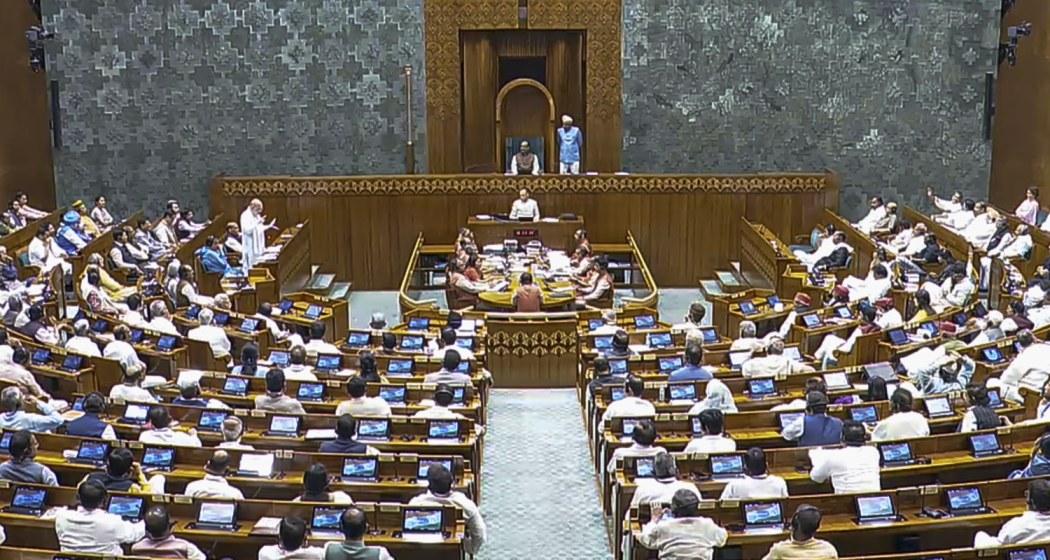
According to reports, the BJP-led government has secured the backing of 75 of the 129 Lok Sabha MPs representing the five southern states — Andhra Pradesh, Telangana, Karnataka, Tamil Nadu and Keralam.
Of these 75 MPs, the BJP accounts for 29, while regional parties contribute 46. The Telugu Desam Party (TDP), Jana Sena Party and Janata Dal (Secular) together account for 20 MPs, followed by the Dravida Munnetra Kazhagam (DMK) with 22 and the YSR Congress Party (YSRCP) with four.
The most significant political development is the DMK’s decision to support the revised legislation. All 22 DMK MPs had voted against the earlier constitutional amendment in April. Telangana’s Bharat Rashtra Samithi (BRS) has also pledged the support of its three Rajya Sabha members.
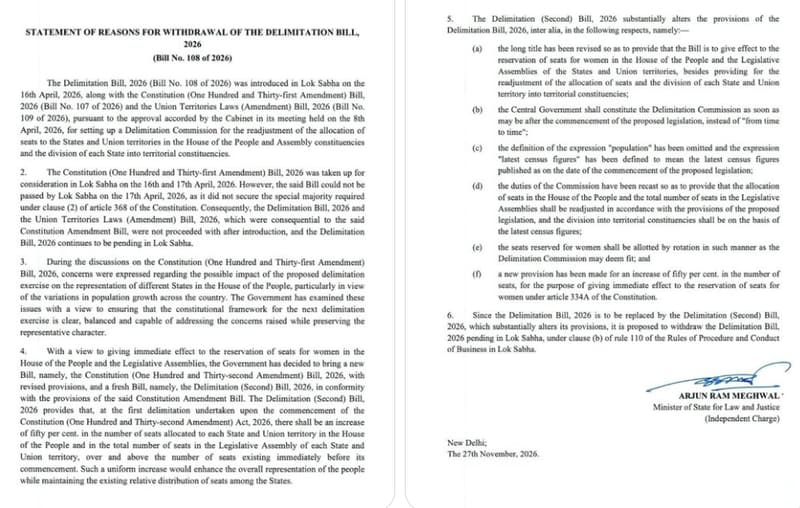
The revised legislation proposes a uniform 50 per cent increase in Lok Sabha seats across states and Union Territories, broadly preserving their existing proportionate representation until 2051.
Southern parties had previously opposed population-based delimitation, arguing that states which successfully implemented population control programmes should not be penalised through reduced parliamentary representation.
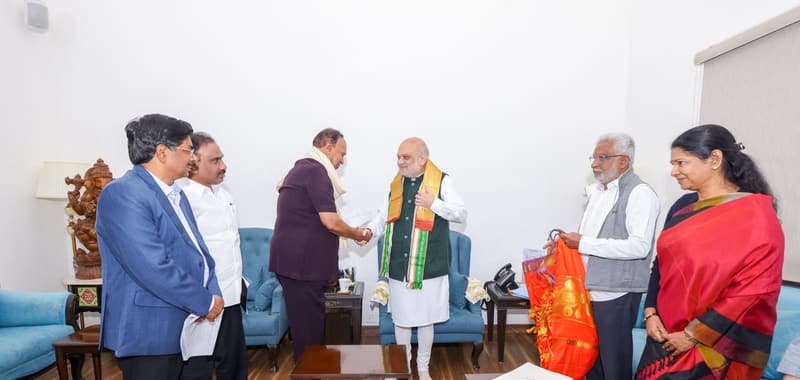
DMK MP Kanimozhi Karunanidhi maintained that her party had consistently demanded fair delimitation. She said Tamil Nadu, which currently has 39 Lok Sabha seats, could have seen its representation decline to 32 under population-based redistribution. Under the revised proposal, its representation could increase to 59.
Andhra Pradesh Chief Minister N. Chandrababu Naidu welcomed the revised formula, saying it would protect the interests of southern states while facilitating the implementation of women’s reservation.
BRS working president K.T. Rama Rao said the revised proposal addressed his party’s concerns regarding proportionate representation. Telangana’s Lok Sabha strength could increase from 17 to 26.
Based on reported political commitments and expected support, not an actual parliamentary vote.
During the government’s previous attempt in April, the constitutional amendment secured 298 votes in favour, while 230 MPs voted against it. The legislation fell short of the required two-thirds majority by 54 votes.
The parliamentary arithmetic has since changed following support from rebel Trinamool Congress MPs, changes in Shiv Sena's parliamentary alignment and renewed negotiations with regional parties.
In the Rajya Sabha, the government’s projected support stands at 166 members, against the required 163 votes if all 244 sitting members participate in the voting.
Meanwhile, the Congress and Left parties continue to oppose linking women’s reservation with the expansion of parliamentary constituencies. They have demanded implementation of the 33 per cent reservation for women within the existing 543-member Lok Sabha.
Union Law Minister Arjun Ram Meghwal is scheduled to introduce the Constitution (132nd Amendment) Bill, 2026, and the Delimitation (Second) Bill, 2026, in the Lok Sabha on November 30.
The constitutional amendment requires a majority of the total membership and at least two-thirds of members present and voting in each House of Parliament.
The support of southern regional parties has substantially altered the parliamentary arithmetic, although the final outcome will depend on attendance, voting patterns and whether the government secures additional support.