India’s first LED dome Planetarium opens in Mysuru, PM Modi inaugurates landmark science facility
Prime Minister Narendra Modi inaugurated the COSMOS-Mysuru Planetarium in Karnataka on Friday, November 13, marking a significant milestone in India's efforts to strengthen astronomy education, scientific research and public engagement with space science
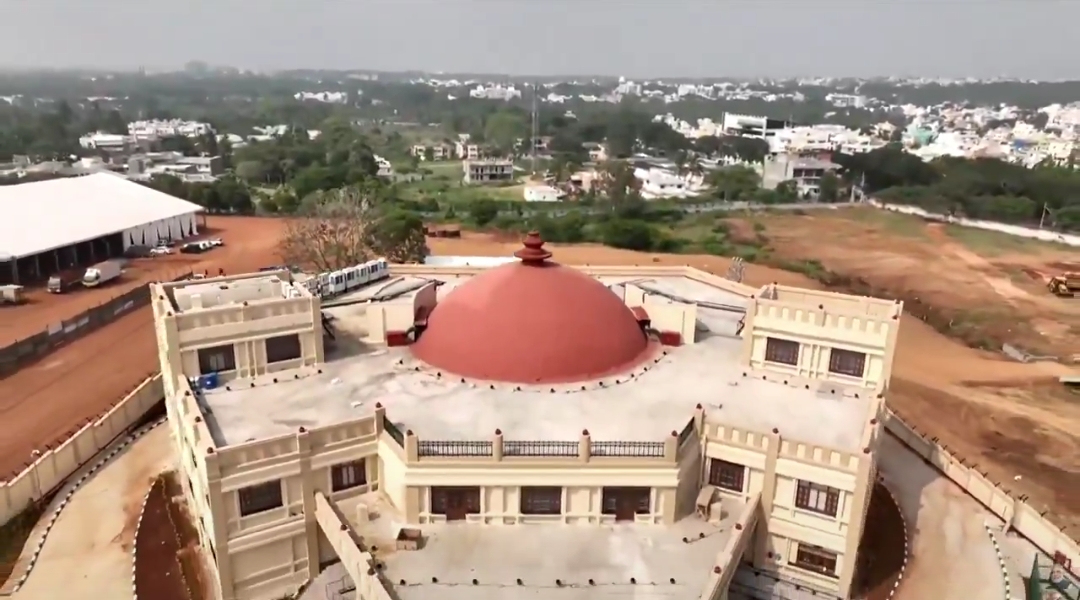
Developed by the Indian Institute of Astrophysics (IIA), the facility is India's first LED dome planetarium and is located on the University of Mysore campus, against the picturesque backdrop of the Chamundi Hills.
The state-of-the-art planetarium features a 15-metre tilted dome equipped with approximately 6,150 LED panels containing an estimated 4.2 crore individual LEDs. The advanced display system is designed to create an immersive visual experience, allowing visitors to explore the universe through detailed astronomical simulations and educational presentations.
Unlike conventional planetariums that rely primarily on projection systems, the COSMOS-Mysuru facility uses LED dome technology to deliver high-resolution imagery directly across the curved viewing surface. The technology is expected to enhance the presentation of celestial phenomena, planetary movements, galaxies and other astronomical subjects.
Envisaged as a centre for astronomy education and training, the planetarium will serve students, teachers, researchers and the general public. It is expected to provide an interactive learning environment that encourages scientific curiosity and helps visitors better understand developments in astronomy and astrophysics.
A major attraction of the facility is its Sky Theatre, which will screen professionally produced astronomy programmes covering different aspects of the universe. The planetarium will also feature an in-house film exploring the historical relationship between Mysuru and astronomy, connecting the city's scientific and cultural heritage with modern astronomical discoveries.
To ensure wider accessibility, the programmes will be presented in Kannada, English and Hindi. The multilingual approach is intended to make astronomy education more inclusive, particularly for schoolchildren and visitors from different linguistic backgrounds.
The Indian Institute of Astrophysics, an autonomous research institution under the Department of Science and Technology, has played an important role in advancing astronomical research in India. Its involvement in the COSMOS-Mysuru project reflects an effort to bring scientific knowledge beyond research institutions and into public learning spaces.
The establishment of the planetarium also strengthens Mysuru's reputation as an educational and cultural centre. With the University of Mysore providing the institutional setting, the facility has the potential to become an important destination for educational visits, science outreach programmes and astronomy-related activities.
The project comes at a time when public interest in astronomy and space science has increased considerably, driven by India's expanding space exploration programme and achievements in lunar and solar research.
Facilities such as COSMOS-Mysuru can help translate complex scientific concepts into accessible visual experiences, potentially inspiring students to pursue careers in physics, astronomy, engineering and space technology.
With its advanced LED dome, multilingual educational programmes and emphasis on scientific outreach, the COSMOS-Mysuru Planetarium represents an important addition to India's science education infrastructure and positions Mysuru as a prominent destination for astronomy enthusiasts.
More from Karnataka
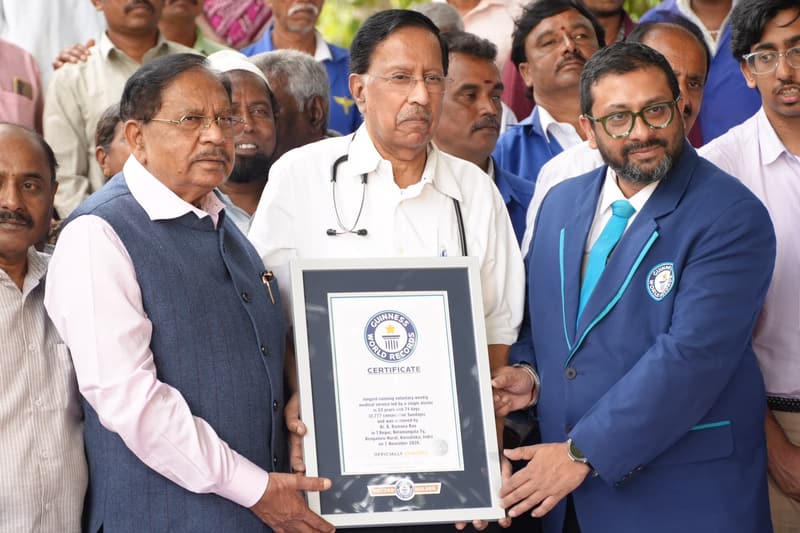
Padma Shri Dr B. Raman Rao enters Guinness World Records for treating over 33 lakh patients over 2777 Sundays

Karnataka CM Shivakumar inaugurates community hall with modern gym, badminton court in Bengaluru