‘Tamil Nadu Comes First’: Stalin Stands Firm on Delimitation Bill After Meeting INDIA Bloc Leaders
Dravida Munnetra Kazhagam (DMK) president and former Tamil Nadu Chief Minister M.K. Stalin on Sunday reiterated his party’s decision to support the Centre’s proposed delimitation legislation, maintaining that safeguarding Tamil Nadu’s political future took precedence over other considerations
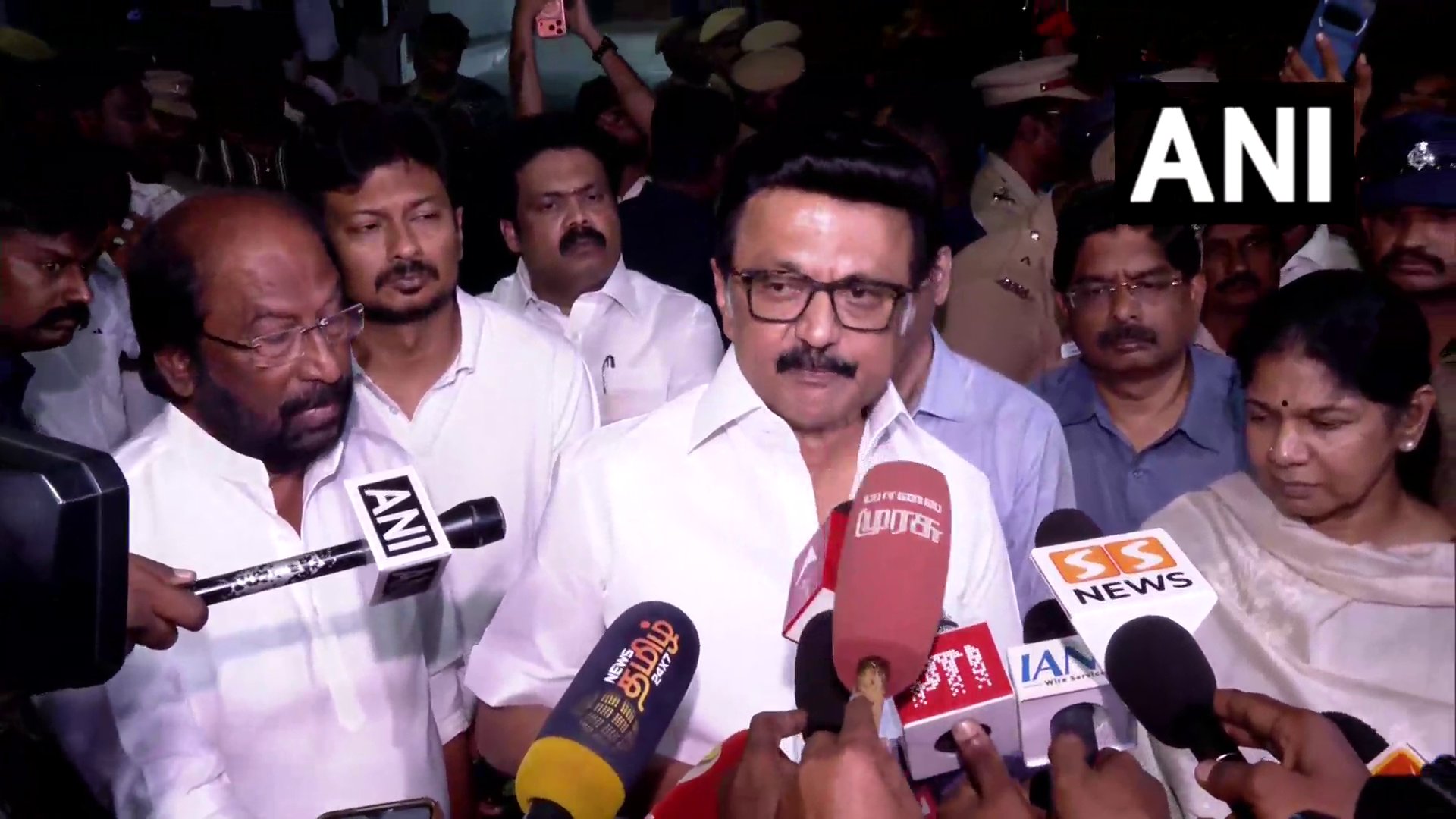
Speaking after meeting senior Congress leaders Sonia Gandhi, Rahul Gandhi and other INDIA bloc leaders in Chennai, Stalin made it clear that the DMK would not reconsider its position on the legislation.
Describing delimitation as a battle for political survival for southern regional parties, Stalin argued that supporting the proposed legislation was necessary to protect the parliamentary representation of Tamil Nadu and other southern states.
Stalin warned that a fresh delimitation exercise based on population figures from a Census conducted after 1971 could adversely affect the political representation of southern states that had successfully implemented population control measures.
He maintained that the DMK had effectively utilised its parliamentary strength to secure safeguards for Tamil Nadu’s proportionate representation for another 25 years.
“There is no alternative but to support this Bill. There is no other alternative proposal either. Using the strength we have in Parliament, we have safeguarded Tamil Nadu’s political future for the next 25 years,” Stalin said.
The high-level opposition delegation, which included Congress president Mallikarjun Kharge and several other senior leaders, had travelled to Chennai in a last-minute attempt to persuade Stalin to withdraw the DMK’s support for the legislation ahead of the parliamentary session commencing on November 30.
However, Stalin maintained that defeating the revised legislation could leave Tamil Nadu and other southern states vulnerable to an unfavourable redistribution of parliamentary constituencies by the Delimitation Commission expected to be constituted in January 2027.
Under the revised proposal, a uniform 50 per cent increase in Lok Sabha seats across states would enable Tamil Nadu’s representation to increase from 39 to 59 seats, broadly preserving its existing proportion of parliamentary representation.
The DMK has maintained that the Centre accommodated its two principal demands — protecting Tamil Nadu’s existing share of parliamentary representation and extending the freeze on the relative allocation of seats until 2051.
The Congress leadership, however, expressed apprehensions over the proposed expansion of the Lok Sabha and the framework for redrawing parliamentary constituencies. Rahul Gandhi argued that the exercise could have adverse consequences for India’s federal structure and democratic representation.
Rejecting suggestions that the DMK should reconsider its decision in the interests of opposition unity, Stalin emphasised that there was no scope for emotional or impulsive decisions on an issue that could determine Tamil Nadu’s political future.
Invoking the legacy of DMK founder C.N. Annadurai and the party’s longstanding commitment to state autonomy, Stalin maintained that its ideological position on securing the rights of states remained unchanged.
“From Anna to Stalin, we have fought for state rights, and we will emerge victorious in that struggle,” he said.
With 22 members in the Lok Sabha and eight in the Rajya Sabha, the DMK’s continued support for the constitutional amendment significantly strengthens the BJP-led government’s parliamentary position.
The unsuccessful effort by the INDIA bloc leadership to persuade Stalin to reconsider his decision also highlights the growing differences between the Congress and the DMK following the breakdown of their electoral alliance in Tamil Nadu.
Concluding his remarks, Stalin reiterated that the presence of national opposition leaders in Chennai had not altered the DMK’s fundamental political priority.
“Our position remains the same, in the past, in the present, and forever. Tamil Nadu comes first,” he asserted.
More from Tamil Nadu
Chidambaram Defends Congress Support to Vijay, Admits Other Developments Ruined Ties with DMK
Billion-Dollar Divorce: Sridhar Vembu’s Ex-Wife Alleges Secret Transfer of Zoho Shares to Family Members